Musty Smell but No Visible Mould: Where to Look and What It Means
As an Amazon Associate we earn from qualifying purchases. Some links on this page are affiliate links, which means we may earn a small commission if you make a purchase.
You walk into your hallway and catch it — a faint, earthy smell. There is nothing on the walls or ceiling. You search the bathroom and kitchen, run the taps, and check the window seals. Nothing obvious. You might assume it is just an old-property smell, a cleaning issue, or that it will sort itself out.
The honest answer is: it probably won’t. A musty smell in a house that looks clean is almost always mould you cannot see yet, actively growing in a space you have not looked behind. This guide explains why that happens, which spots are most likely to harbour the problem, and how to find it without pulling your home apart.
Diagnosis comes first. Anyone can sell you a mould spray, but you need to know where to look before you buy anything.
Why You Can Smell Mould Without Seeing It
Mould does not need to reach a visible surface to announce itself. As microscopic fungi feed on damp organic material — dust, plaster, timber, wallpaper paste — they release volatile organic compounds as a byproduct. Those gases are what your nose reads as a musty, mushroomy smell. They are structurally different from the solid mould itself and travel through air gaps in ways the mould cannot. Gaps around skirtings, through floorboard joints, and up into the voids behind boxing are more than enough for these compounds to reach the room you are standing in.
This means the smell can be strongest in one room while the source is in the next, or behind a wardrobe you have not moved in months. The nose is a good early warning system — better than the eyes in this case. The absence of visible mould does not mean the absence of a problem; it means the problem is in its early stages, which is the best time to find it.
A persistent musty smell with no obvious source is listed in UK government damp and mould guidance as a prompt for investigation, not a reason to assume everything is fine. Guidance recommends checking behind furniture, inside cupboards, and around extractor fans as a starting point.
The Three Conditions Mould Needs to Grow
All mould needs three things simultaneously. Understanding this helps you identify exactly where to look.
Moisture. This is the first requirement. In UK homes, the source is almost always condensation — water vapour from cooking, showering, and drying clothes indoors, settling on cold surfaces. External walls are most vulnerable, particularly north-facing sides and walls backing onto unheated cavities. The UK Centre for Sustainable Energy identifies furniture placed against external walls as a primary location for hidden condensation-related mould, because the furniture insulates the wall from room warmth, keeping the surface cold enough for moisture to condense even when the rest of the room feels fine.
Organic food. Mould needs something to feed on. In a house, this is rarely in short supply: dust, skin cells, fabric fibres, paper, wallpaper paste, timber, and even the organic components of some insulation materials. These are present everywhere, which is why moisture is almost always the determining factor.
Still air. Air movement prevents spores from settling and growing. Behind a large piece of furniture pushed flush against an external wall, airflow is effectively zero. That is the mechanism behind the most common hidden mould scenario.
Remove any one of these three and mould cannot establish. Fix the moisture source and you solve the problem at the root. Surface treatments are secondary measures that only matter after the moisture issue is resolved.
The Most Common Hiding Spots
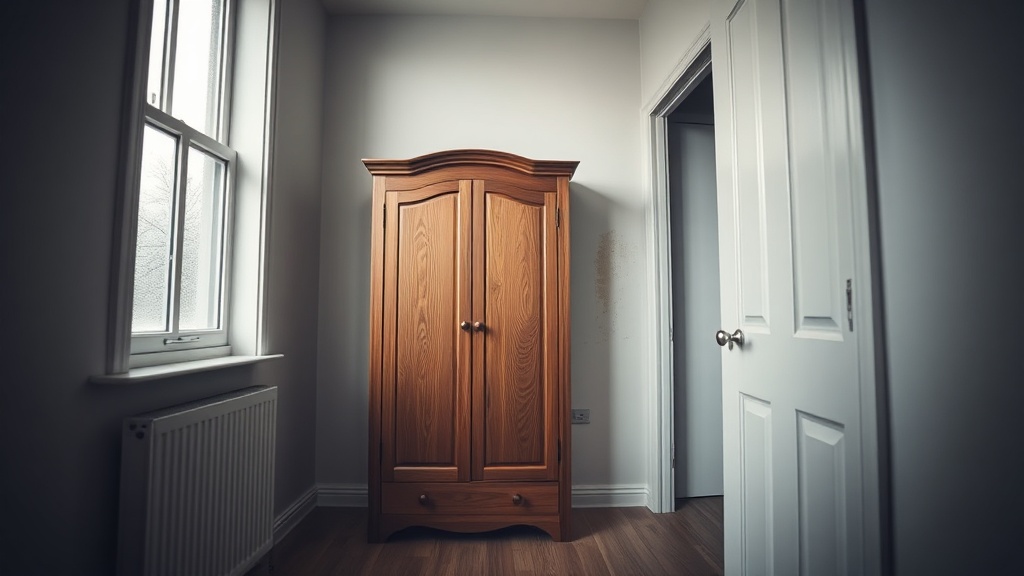
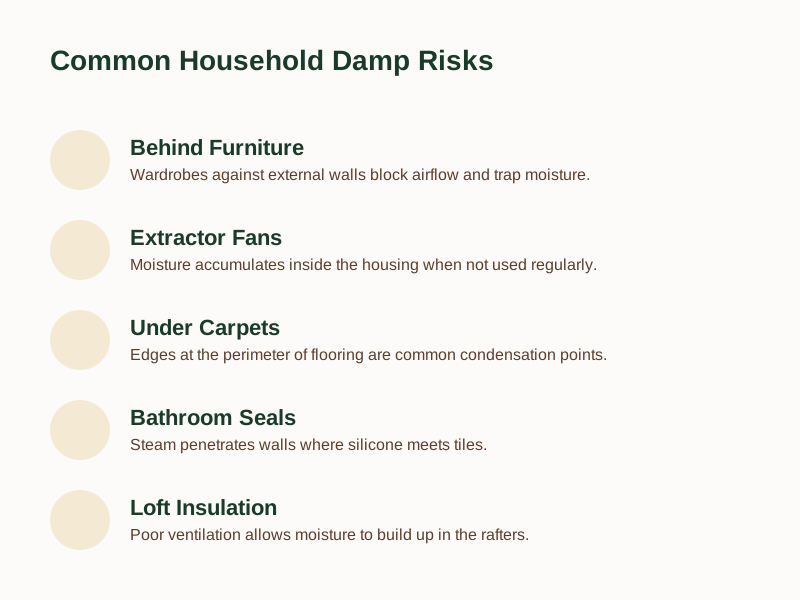
The most common hiding place for mould that smells but cannot be seen is behind furniture against external walls — specifically behind wardrobes, headboards, and sofas placed against north-facing or cavity-wall sides. The mechanism is consistent: the wall is cold, the furniture blocks airflow, condensation forms on the surface, and the dust trapped between the furniture and the wall provides a food source. The mould grows on the back of the furniture or the wall, invisible until you move the piece.
UK Centre for Sustainable Energy guidance on condensation identifies furniture placed against external walls as a primary hidden mould location. In practice, this is the scenario that comes up most often: a wardrobe against the north side of a bedroom, a sofa pushed against the cold wall of a period terrace, or a headboard flush against an uninsulated solid wall.
Beyond furniture, other high-risk spots follow a consistent pattern — any enclosed or low-airflow space against a cold surface:
- Inside built-in cupboards and wardrobes, particularly those on external walls
- Under carpet edges and at the perimeter of laminate flooring, especially in ground-floor rooms
- Behind bathroom wallpaper, where steam penetration meets a cold wall
- Inside extractor fan housings, where moisture accumulates between uses
- In loft spaces, particularly where insulation has been installed over ceiling joists without addressing ventilation
The smell is frequently strongest in the room you are in, even when the source is in the next room or behind a door. Air movement and pressure changes carry the volatile compounds further than you would expect, and warm air rising through the house pushes them upward into bedrooms and living spaces from sources that are lower down.
If you are finding readings consistently above 60% relative humidity, you have a moisture problem that needs addressing at the source. A basic hygrometer gives you an actual reading rather than a guess.
If the smell persists all year round rather than just in winter, or worsens noticeably after heavy rain, consider whether there is an active leak or penetrating damp. Our guide to how to tell damp types explains the differences in more detail.
How to Check Without Moving Everything
You do not need to pull your home apart to narrow this down. A torch and a methodical approach will get you a long way.
Work by zones. Start with the obvious furniture: pull wardrobes away from external walls by a few inches and shine a torch along the back surface and the wall behind. Look for black, grey, or greenish patches; the colour that confirms mould rather than surface dust is usually a slightly fuzzy or velvety appearance. Check the back of sofas and beds the same way. Look at the underside of curtains if they hang to the floor and sit close to a cold wall.
In the bathroom, remove the extractor fan cover and look inside the housing. This is a common source of a smell that drifts into other rooms. Check the back of bathroom wall tiles and around the silicone seal where the shower tray meets the wall, particularly if the sealant has gone black.
Feel the walls in suspect areas. A cold, slightly damp feeling — distinct from a simply cold surface — is a moisture reading your skin can detect before any visual sign appears. We have a guide to how to use a moisture meter if you want to be more precise.
For tenants: resist the urge to pull fitted furniture or interfere with the structure of the property. If you suspect hidden mould behind a fitted wardrobe, report it to your landlord in writing with photographs. The renters guide to damp and mould covers your rights and the landlord’s obligations.
What to Do If You Find Hidden Mould
If you find it, the instinct to scrub hard is understandable but often the wrong approach. Vigorously scrubbing mould on a porous surface such as plaster or timber can rupture the growth and spread spores deeper into the material.
For small, accessible areas, a fungicidal wash applied with a cloth rather than a brush is the correct approach. HG Mould Remover (paid link) and similar products are effective on hard surfaces such as tiles and grout, and owner reviews consistently report that they work within ten to thirty minutes. The caveat in owner feedback is that the bleach smell requires good ventilation, and the mould will return if the moisture source is not fixed first. The product removes the symptom; ventilation fixes the cause.
View on Amazon → (paid link)
When mould is found behind wallpaper, under fitted flooring, or inside structural voids, professional removal is almost always necessary. These situations involve the fabric of the building, and a surface treatment will not reach the root of the problem.
Tenants: report in writing to your landlord or housing association as soon as you find evidence. Attach photographs. The government’s damp and mould guidance for housing providers sets out that a persistent smell with no obvious surface cause is a trigger for investigation. If you are in social housing, Awaab’s Law means landlords are under increased obligation to respond to damp and mould hazards within a set timeframe. If the landlord does not act, your local authority’s environmental health team is the next route.
For help documenting the issue, our reporting damp to landlord guide has a structured approach that covers what to include and how to follow up.
Frequently Asked Questions
Is a musty smell dangerous to my health?
The NHS states that damp and mould can affect respiratory health, particularly for children, older people, and those with existing lung conditions. A persistent smell you cannot locate warrants investigation, but it is not a medical diagnosis — if you are concerned about symptoms, speak to a GP. The smell itself is a symptom of a moisture problem that needs fixing.
Can I just use air freshener to hide the smell?
Air freshener masks the smell temporarily but does nothing to the mould or the moisture source. The smell will return, usually within days. Masking is not fixing, and every day the moisture persists is another day conditions are suitable for the mould to grow.
How do I know if it’s condensation or mould?
Condensation is wet water droplets on a cold surface. Mould is a fuzzy or powdery growth. If you can see mould, the condensation has been present long enough to cause it. The presence of a musty smell with no visible droplets suggests the moisture is condensing somewhere you cannot see.
What should I do if I’m a tenant and the landlord ignores my report?
Keep a written record of every communication, with dates. Photograph evidence. If the landlord does not respond within a reasonable timeframe, contact your local council’s environmental health team and the Housing Ombudsman. Shelter and Citizens Advice have detailed guidance on the process. A well-documented complaint is harder to dismiss than a verbal one.
Can I paint over mould?
No. Mould will grow back through standard paint, and anti-mould paint will fail if applied over active growth without proper preparation. Clean and treat the surface with a fungicidal wash first, address the moisture source, then paint if you choose to. Even then, paint is a secondary measure; it does not stop the conditions that caused the mould.
Hidden Mould Risk Assessment
| Location | Risk Factor | Likely Cause |
|---|---|---|
| Behind Wardrobe | High | Cold wall + blocked airflow |
| Under Carpet Edge | Medium | Ground floor condensation |
| Extractor Fan Housing | High | Moisture accumulation |
| Bathroom Silicone Seal | Medium | Steam penetration |
| Loft Insulation | Medium | Poor ventilation |
| Wallpaper (Bathroom) | High | Steam + cold surface |
| Built-in Cupboard | Medium | Enclosed space + dust |
Where to Go From Here
The musty smell is a warning sign, not a cosmetic annoyance. Unlike a leak you can trace or a patch of damp you can see, this one rewards a methodical approach over a quick assumption.
The most common location is behind furniture against external walls — the combination of a cold surface, zero airflow, and accumulated dust creates exactly the conditions mould needs to grow invisibly. Start there. Move the wardrobe. Check the back of the sofa. Look inside the extractor fan housing.
Once you have located the source, the fix follows from the cause: ventilation, dehumidification, or a combination of both.
Not sure where to start? Get the Free Damp & Mould Diagnosis Checklist to work through the likely cause and the right next steps for your property.
Related Guides
For a complete overview, see our Is It Condensation, Rising Damp or a Leak? How to Tell the Difference .
Sources & Further Reading
As an Amazon Associate we earn from qualifying purchases.
Note: General guidance only, verify details with a qualified professional or official source.