What Does the NHS Actually Say About Mould in Your Home?
As an Amazon Associate we earn from qualifying purchases. This page contains affiliate links — if you buy through them, we earn a small commission at no extra cost to you.
You’ve seen the headlines about “toxic black mould” and the knot in your stomach is understandable—especially if you have young children or someone with asthma at home. The internet has no shortage of alarming content, but here’s the thing: the NHS, the UK’s own public health authority, doesn’t use that term at all. Understanding what they actually say cuts through the panic and points you directly at what works: fix the damp, remove the mould, and symptoms typically resolve.
That’s a far more useful answer than worrying about a specific species of mould. So what does the NHS guidance actually state, what does it mean in practice, and what should you do next?
The NHS Position on Health
The NHS treats damp and mould as a collective environmental health risk rather than a problem defined by any particular species. Their published guidance makes this clear: mould can cause respiratory problems, respiratory infections, allergies, and asthma—but the mechanism of harm is consistent across mould types, not tied to a specific strain. The health risk comes from exposure to mould spores and the allergens and irritants they produce, which affect the immune system and respiratory function broadly.
The NHS does not recommend testing for specific mould species. It does not use the term “toxic black mould,” and it does not provide a diagnosis of “mould sickness.” That distinction is deliberate. The official position, backed by UK health guidance from the NHS and the UK Health Security Agency, is that the appropriate response is the same regardless of which mould is present: remove the damp conditions that allow it to grow, clean up the visible mould, and manage ventilation and heating to prevent recurrence. Symptoms in otherwise healthy people typically resolve once the damp is addressed.
Certain groups are more vulnerable: babies and young children, older people, those with existing skin problems, people with respiratory conditions such as asthma, and those with weakened immune systems. For these households, the urgency of addressing damp and mould is higher, but the approach remains the same.
The practical implication is significant: rather than paying for mould species testing or worrying about whether your specific patch is a particular strain, the NHS guidance points you directly at the fix. That’s the information that actually helps.
What Causes Damp and Mould (NHS View)
The NHS identifies several causes of damp and mould in the home, and understanding which one applies to your situation matters because the fix differs depending on the source.
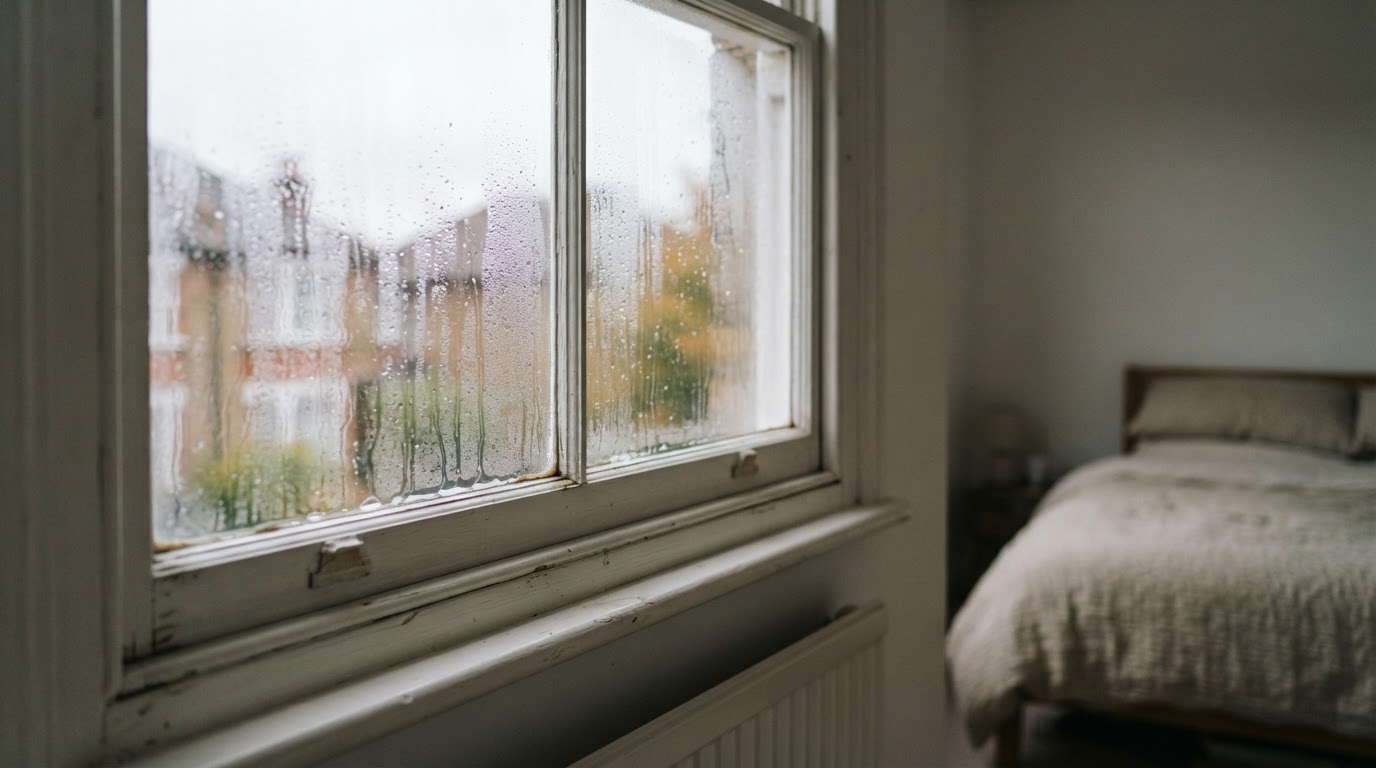
Condensation is the most common cause of damp and mould in UK homes. It happens when moist air meets a cold surface—a bathroom mirror after a shower, a north-facing wall in an unheated room, the back of a wardrobe pressed against an external wall. Double glazing and improved insulation have made homes warmer but also reduced the natural draughts that used to ventilate them, so moisture that once escaped through gaps now stays inside the house.
Other causes include leaking pipes or water tanks, rising damp in basements or ground floors, and rain seeping in through damage to the roof or around window frames. If you have a newly built home, it may still be damp from construction water that hasn’t fully dried out—this is normal and should resolve over the first year or two of heating and ventilation.
The key distinction for most readers is this: condensation is a moisture management problem, solvable with ventilation and heating. Structural issues like rising damp or penetrating rain ingress need a different approach—and if you’re not sure which you have, a proper survey is worth arranging before spending money on the wrong fix. You can work through this using our free damp and mould diagnosis checklist .
Practical Steps to Reduce Risk (NHS Advice)
The NHS offers clear, practical advice on preventing damp and mould—and most of it costs nothing beyond a change in habit. Here’s what they recommend.
Keep your home adequately warm, especially in cold weather. Use heating when you can afford to, insulate your loft and walls, and use double glazing where possible. The goal is to reduce the number of cold surfaces where moisture in the air can condense.
Let fresh air in. Keep windows open—on the latch is sufficient for safety—particularly during and after cooking, showering, or any activity that generates steam. This is the most commonly overlooked step. Extractor fans help too, but only if they’re actually vented to the outside air rather than into a loft space, which just moves the moisture elsewhere.
Manage where steam goes. Close internal doors to bathrooms and kitchens when in use to stop steam spreading to cooler rooms. Keep trickle vents in window frames open. These small adjustments make a measurable difference over a condensation season.
Move furniture away from external walls periodically, especially in bedrooms and living rooms where airflow is often poorest. This allows air to circulate behind furniture and prevents the cold, still conditions where mould thrives.
For bathrooms and kitchens specifically, the routine is straightforward: run the extractor fan or open a window during and after use, wipe down condensation from tiles and glass promptly, and leave the bathroom door closed while the room is drying out. A dehumidifier can help in persistently damp rooms—particularly if you dry clothes indoors—but it’s a complement to ventilation, not a replacement for it.
If you’re in a rented property and ventilation is poor because the extractor fans don’t work, the trickle vents are missing, or there’s no heating, that’s your landlord’s responsibility to fix. See the section on tenant rights below.
When to Speak to a GP
The NHS advises speaking to a GP if you are concerned about your health and symptoms that might be linked to damp and mould exposure. Common symptoms that can be associated include wheezing, shortness of breath, a persistent cough, or skin rashes—though these have many possible causes, which is exactly why a GP is the right person to assess them.
For most people, symptoms improve once the damp and mould are removed and the home environment is better managed. Many families find that after addressing ventilation and heating, respiratory symptoms improve noticeably within weeks. If you have asthma or a known mould allergy, your GP may be able to confirm whether mould is a trigger for you and adjust your management plan accordingly—which might mean an inhaler adjustment rather than any specific “mould cure.”
The important point is this: don’t try to self-diagnose a mould-related illness from a list of symptoms. If you’re worried, speak to a doctor. But do also fix the damp—that’s the step that addresses the root cause, whether or not symptoms turn out to be mould-related.
Who Is Responsible for Fixing It?
This depends on whether you own or rent your home, and the answer matters because it determines what action to take.
If you’re a tenant—whether in private or social housing—your landlord has a legal responsibility to keep the property free from hazards including damp and mould, under the Housing Health and Safety Rating System. The first step is to report the problem in writing to your landlord or housing department. Keep copies of everything.
If the problem persists after you’ve reported it, contact your local authority’s environmental health team. They have powers to investigate and can serve a notice on the landlord requiring them to address the hazard. For social housing tenants specifically, Awaab’s Law—introduced under the Social Housing (Regulation) Act 2023—means social landlords must investigate and fix serious damp and mould hazards within set legal timescales once the relevant duties apply. This doesn’t require a court order; it’s a direct obligation on the landlord.
Citizens Advice and Shelter both have detailed guidance on tenant rights regarding damp and mould, and can help you draft a written complaint if you need it. If you’re in this situation, the practical steps in the previous section are still worth following—ventilation and heating help regardless of who is responsible for the underlying cause—but don’t rely on them alone if there’s a structural or landlord-maintenance issue that needs resolving.
For homeowners, the responsibility is yours, which is why understanding the cause matters before spending money. If you’re unsure whether your damp is condensation or something structural, a proper independent damp survey—arranged by a surveyor rather than a contractor who also sells remedial work—can give you an honest diagnosis without a conflict of interest. The free checklist can help you narrow things down first.
NHS Damp & Mould Risk Factors
| Risk Factor | Typical Cause | Fix Strategy |
|---|---|---|
| Condensation | Moist air meets cold surfaces | Ventilation and heating |
| Rising Damp | Ground moisture entering walls | Professional damp proofing |
| Penetrating Damp | Rain ingress through defects | Repair roof and windows |
| Construction Damp | Water trapped in new builds | Time and heating |
| Leaks | Burst pipes or tanks | Immediate repair |
Note: This table outlines common causes of damp and mould identified by health authorities. Always consult a professional surveyor for an accurate diagnosis of your specific property.
Frequently Asked Questions
Is black mould toxic?
The NHS does not use the term “toxic black mould.” UK health guidance focuses on the health effects of damp and mould as a collective—all moulds can produce allergens and irritants, and exposure can cause or worsen respiratory problems and asthma, particularly in vulnerable groups. The colour of the mould is not a reliable guide to how harmful it is. What matters is removing it and fixing the damp conditions that allowed it to grow.
Can I remove mould myself?
For surface mould on walls, tiles, sealant, or window frames, yes—appropriate fungicidal mould removers (such as HG Mould Remover (paid link) or Dettol Mould and Mildew Remover) are effective on hard surfaces. Wear gloves, open a window, and follow the product instructions. Do not simply paint over it with anti-mould paint without treating it first—that masks the problem, it doesn’t solve it. Critically, removing surface mould does nothing about the underlying damp, which is why the mould will return if you don’t address the moisture source.
Buy on Amazon → (paid link)
What should I do if my landlord won’t fix damp?
Report the problem in writing to your landlord first—this creates a paper trail. If they don’t respond or don’t take action within a reasonable time, contact your local council’s environmental health team. For social housing, Awaab’s Law sets specific timescales for landlords to investigate and fix serious hazards. Citizens Advice and Shelter both have detailed guidance on your rights and how to escalate. You shouldn’t need to pay for a professional mould treatment yourself if the root cause is a disrepair issue your landlord is responsible for.
How long does it take to get rid of mould?
Surface mould can be cleaned within hours using the right products. Getting rid of the underlying damp and preventing recurrence is an ongoing management issue—it means consistent ventilation, adequate heating through the winter months, and fixing any leaks or structural issues. Most condensation-driven mould problems show real improvement within a few weeks of changing habits and airflow. If you’ve addressed the cause and the mould keeps coming back, you may be dealing with a structural damp issue that needs professional investigation.
Where to Go From Here
The NHS doesn’t sell a “mould cure.” It offers a fix for damp—and that is genuinely empowering, because it means the solution is in your hands (or, if you’re a tenant, in your landlord’s legal obligations).
Understanding the official UK position cuts through a lot of unnecessary anxiety. There’s no need to pay for mould species testing or panic about a specific strain of mould in your home. The mechanism of harm is consistent across mould types: moisture, spores, allergens, and respiratory sensitivity. The fix is always the same: drier air, warmer surfaces, better airflow.
If you’re working through whether your damp is condensation, a leak, or something structural—or if you’re a tenant who needs to know exactly what to put in writing to your landlord—start with our free resource.
Get the Free Damp & Mould Diagnosis Checklist — /free-checklist/
It walks you through the key signs to look for, the questions to ask, and the right next step depending on what you find. No sales pitch. Just the honest answer to where you are and what to do about it.
Explore More Topics
Go deeper on specific topics:
- Is It Safe to Sleep in a Room With Mould? NHS Advice Explained
- Mould in Children’s Bedrooms: What NHS Guidance Says and What to Do
- When to See a Doctor About Mould Exposure — NHS Signposting
Sources & Further Reading
As an Amazon Associate we earn from qualifying purchases.
Note: The information provided is for general guidance only. Always verify details with a qualified professional or official source.