How to Report Damp and Mould to Your Landlord in Writing
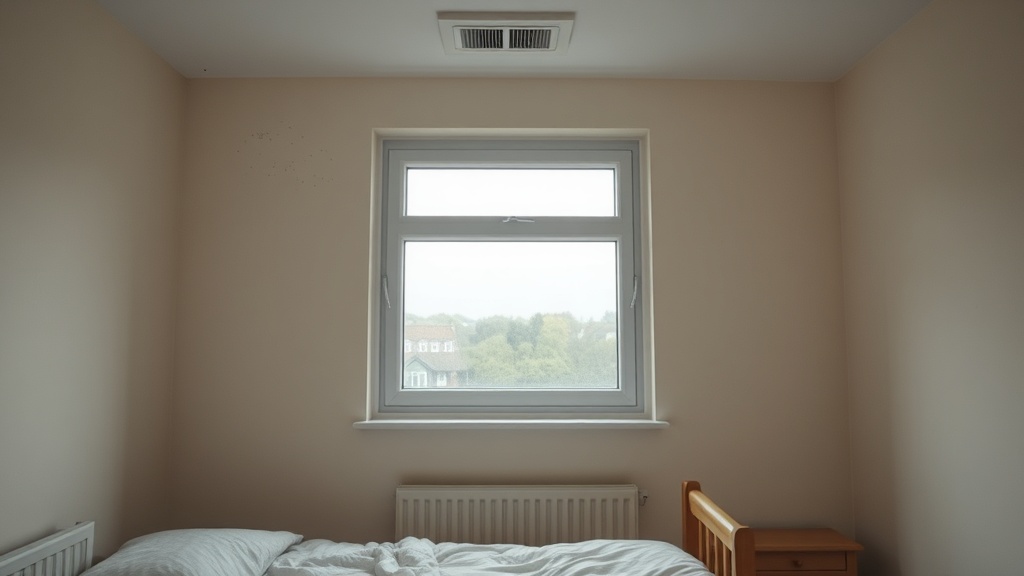
You’ve spotted black mould on the ceiling. Your first instinct might be to call your landlord or knock on their door. But in the UK, verbal complaints are easily forgotten—or disputed. A quick chat in the hallway gives your landlord plausible deniability, and you have nothing in writing to show for it.
The fix is straightforward and costs nothing: report it in writing. This article walks you through why that matters legally, what to include, your landlord’s duties under Awaab’s Law, and a template you can send today.
Why Verbal Complaints Fail (and Why Writing Wins)
Under UK law, your landlord’s duty to act is triggered by written notification. A verbal conversation, text message, or WhatsApp message is not a formal notification—it has no dated record, it doesn’t start any statutory timeframe, and it provides no evidence if your landlord later claims they were never told.
This isn’t a technicality. It’s the practical difference between a complaint that disappears and one that forces action.
The three jobs a report must do are: create a dated record, get an inspection arranged, and protect you if the landlord fails to act. Written notification does all three. A phone call does none of them reliably.
Shelter UK guidance is direct: always put your request in writing and keep a copy. That’s the advice from the organisation that has supported tenants on housing rights for decades.
The comparison is straightforward:
- Verbal: no dated record, no legal clock started, hard to prove it happened. Landlords can honestly or otherwise say they were never told.
- Written (email or letter): creates a timestamped record, triggers the landlord’s legal duty to respond, and forms the backbone of any complaint or legal action that follows.
- Text or WhatsApp: better than nothing for creating a date record, but short-form and easy to scroll past. An email or formal letter is the safer choice.
A quick email to your landlord saying “I am writing to report black mould in the bedroom, approximately 20cm x 20cm, present since November, with a musty smell” is the difference between being taken seriously and being ignored.
If you’re not sure whether what you’re seeing is condensation, rising damp, or something else, our damp and mould diagnosis guide explains the difference—worth reading before you write your report, so you can describe the problem accurately.
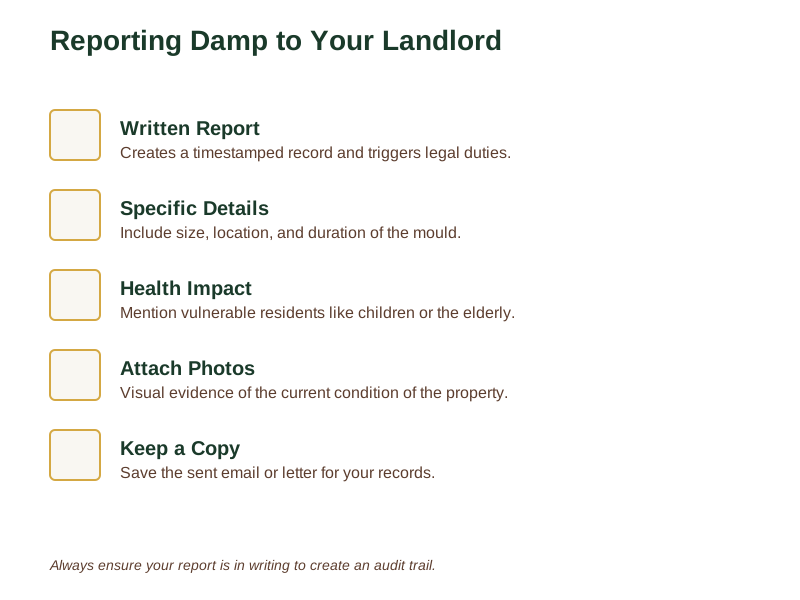
What to Include in Your Report (The 5 Essentials)
A vague email gets a vague response. A specific one gets an inspection. The difference is detail.
There are five things every damp and mould report should include:
- Your address and the date — straightforward, but it establishes a timestamp immediately.
- Location of the problem — name the room and be as specific as possible about where on the wall or ceiling the mould or damp patch is.
- Size and duration — “a patch of mould” is too vague. “Black mould, approximately 25cm across, on the upper corner of the bedroom ceiling, present since November” gives the landlord something to work with and a baseline to measure progress against.
- Any impact on health or living conditions — mention if anyone in the household is a young child, older person, or has a respiratory condition. You don’t need to self-diagnose or list symptoms; a simple “there is a child under two in the household” is enough to flag it as a priority.
- Previous reports — if you’ve raised this verbally before, say so. “I reported this to you by phone on 14 January and have had no response” closes off the “we didn’t know” defence.
Supporting photos are genuinely useful—they show the landlord what you’re seeing and create a record of the condition at the time of reporting. Attach them to your email, or include them in the body of a letter.
Avoid framing it as an accusation or a personal grievance. Keep it factual: this is what I’ve found, this is how long it’s been there, this is the impact. Think of it as a repair request, not a complaint letter. That framing serves you better legally and practically.
Tenants who describe the problem accurately get inspections arranged faster than those who stay vague. A tenant who wrote “black mould, 20cm x 20cm, on the ceiling corner, since November, causing a musty smell” had a plumber and a new ventilation fan installed within a week. A tenant who said “there’s a bit of mould in the bathroom” was sent bleach and told to ventilate more. The landlord’s response was proportionate to the detail in the report.
If you’re unsure which type of damp you’re dealing with, our guide on how to tell condensation from damp gives you the framework.
The UK Landlord’s Duty: Awaab’s Law and Timeframes
Your landlord has a legal duty to keep the property fit for human habitation. That’s not a suggestion—it’s in the Homes (Fitness for Human Habitation) Act 2018, and it applies to all rented homes in England. Damp and mould that affects health and safety falls squarely within that duty.
From 27 October 2025, social housing landlords are also bound by Awaab’s Law—named after Awaab Ishak, a two-year-old who died after prolonged exposure to mould in his social home. Awaab’s Law requires social landlords to treat serious damp and mould as an urgent hazard and to arrange an inspection within 10 working days of a formal written complaint. Private renters aren’t covered by Awaab’s Law directly, but the Homes Act still applies—the principle is the same: a written report triggers a duty to act.
The protection against retaliation is real. You cannot legally be evicted for making a genuine complaint about damp or mould. If your landlord threatens eviction or cuts services in response to a written report, that is itself a separate legal problem for them.
Most landlords do respond to written reports, particularly if the report is detailed and professional. The ones who don’t are exactly the ones you need a written record against—that’s what makes the email or letter worth the ten minutes it takes.
For social housing tenants specifically, there is an additional layer of regulation through the Social Housing Regulation Act and the Housing Ombudsman. If your social landlord fails to respond adequately, you have a complaints procedure and an ombudsman to escalate to. Our page on social housing rights covers this in more detail.
The Template: Copy, Paste, and Send
Below is a template you can use for an email or letter. Fill in the bracketed sections with your specific details.
Subject: Damp and Mould Report — [Your Address]
Dear [Landlord/Property Manager name],
I am writing to report damp and mould at [your full address], [flat number if applicable].
The problem is located in [room name] and affects [describe the area — e.g., the upper corner of the ceiling / the wall behind the wardrobe]. The mould is approximately [size] and has been present since [month/year]. [Add a brief description of any musty smell, staining, or peeling paint if relevant.]
[If applicable: There is a child under [age] / an older person over 65 / a household member with a respiratory condition living in the property.]
I first raised this issue on [date] by [phone/email/letter] but have not yet received a response or an inspection.
I am requesting that you arrange for a qualified surveyor or contractor to inspect the property within 14 working days to identify the cause and carry out any necessary remedial work.
I have attached photographs of the affected areas for your reference.
Please confirm receipt of this letter and provide details of your planned inspection.
Yours sincerely, [Your name] [Your phone number] [Your email address]
Send this by email and keep the sent copy. If your landlord requires post, send it signed for—that gives you proof of delivery.
Now you have the record, the request, and the timestamp. That’s what triggers the process. Once it’s sent, download our Free Damp & Mould Diagnosis Checklist to track what happens next—it’s a useful way to document the condition of the property and the landlord’s responses over time.
What If They Ignore You?
Most landlords respond to a detailed written report. If yours doesn’t, follow this sequence:
First, keep everything. Every email, every text, every letter—sent and received. Screenshot your sent folder. If you had a phone call, follow it up with an email immediately: “Further to our phone conversation today, I am writing to confirm that I reported [problem] and requested [action].” That turns a verbal conversation into a written record retroactively.
If your landlord refuses to engage in writing or explicitly asks you to just call them, send the email anyway and note in it: “As discussed by phone today, I am writing to confirm the following.” That preserves your position.
When the landlord fails to act after a reasonable written request, your escalation options are:
- Your local council’s environmental health team — this is often the most effective first step for both private and social tenants. Environmental health officers have powers to inspect the property and serve a formal notice on the landlord requiring works. This is free to the tenant.
- Shelter — their helpline (0808 800 4444) can advise on your specific situation and, in some cases, provide template letters for formal complaints. Their online guidance at england.shelter.org.uk covers this in detail.
- Your landlord’s formal complaints procedure — required before escalating to the Housing Ombudsman (for social housing) or the Property Redress Scheme (for private landlords).
- A personal claim under the Homes (Fitness for Human Habitation) Act — if the property is not fit to live in and the landlord has been given written notice, you may be able to bring a claim in the county court. Shelter or a housing solicitor can advise whether this is worth pursuing in your situation.
The council environmental health route often produces results faster than legal proceedings. Many tenants report that a landlord who ignored emails arranged an inspection within a fortnight once the council got involved. It’s a blunt instrument, but an effective one.
If you need support drafting further letters or understanding your options, get in touch and we’ll point you to the right resources.
Damp Report Essentials Checklist
| Essential | What to Include | Why It Matters |
|---|---|---|
| Address & Date | Full property address and date of report | Establishes a timestamp immediately |
| Location | Specific room and exact spot on wall/ceiling | Helps the surveyor find the issue |
| Size & Duration | Approximate size and how long it has been there | Provides a baseline to measure progress |
| Health Impact | Mention of vulnerable residents | Flags the issue as a priority |
| Previous Reports | Details of any prior verbal complaints | Closes off the defence that the landlord was unaware |
| Photos | Attach clear images of the affected area | Visual evidence of the current condition |
Frequently Asked Questions
Can I send a photo of the mould instead of a letter?
Photos are excellent evidence and worth including, but they don’t replace a written report. A photo tells the landlord what the problem looks like today; a letter or email creates the formal record that starts the legal clock and gives you a dated document to refer back to. Send both.
What if my landlord says it’s my fault?
Your landlord should not blame you for damp and mould without investigating the cause first. Condensation and mould can result from structural issues, leaks, or poor ventilation that are not your responsibility. Report the issue in writing regardless of their initial response—a formal letter puts the duty to investigate back on them. If they persist in blaming you without acting, escalate to the council’s environmental health team.
Do I need to pay for a damp survey?
No. Your landlord is responsible for arranging an inspection. If they refuse or ignore your written request, the council’s environmental health team can instruct them to commission one. You should not be out of pocket for a survey that’s your landlord’s responsibility.
Is Awaab’s Law only for social housing?
Yes—Awaab’s Law currently applies to social housing in England. Private renters are covered by the Homes (Fitness for Human Habitation) Act instead, which has a broader definition of unfitness but does not set the same specific timeframes. If you’re in private rented housing and your landlord is unresponsive, the council’s environmental health route is usually the faster option.
The core of this is straightforward: write it down, keep a copy, send it. That’s the step that separates a complaint that disappears from one that forces action. Your landlord has a legal duty to keep your home fit to live in—but that duty is triggered by written notification. Everything else follows from that.
If you’re ready to take stock of what you’re dealing with before you report it, download the Free Damp & Mould Diagnosis Checklist . It takes you through the key things to note about the problem—location, size, likely cause—so your report is as specific and effective as possible.
Related Guides
For a complete overview, see our Landlord Responsibilities for Damp and Mould: What UK Law Says .
Sources & Further Reading
Note: This information is for general guidance only. Always verify details with a qualified professional or official source.