Landlord Responsibilities for Damp and Mould: What UK Law Says
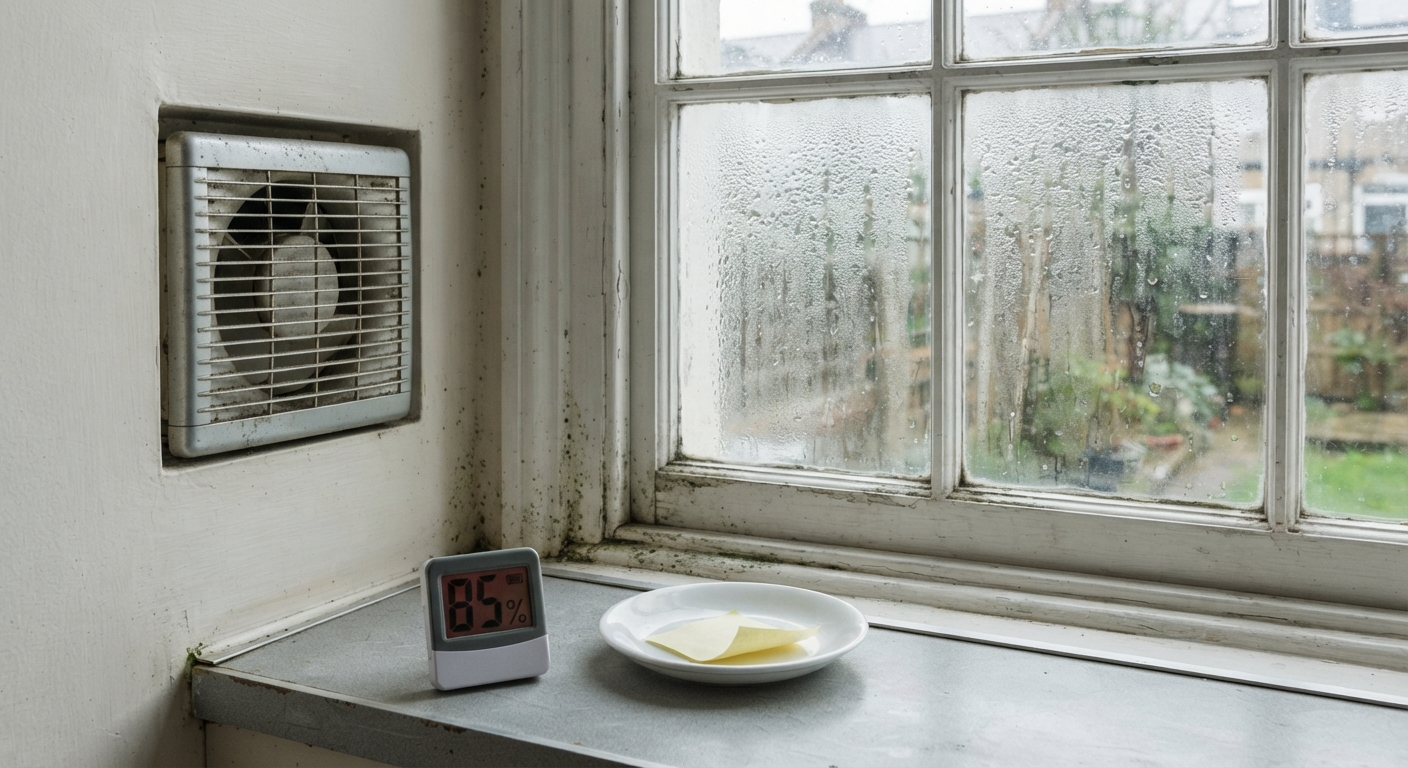
You spot black patches on the wall. You tell your landlord. They say it’s because you don’t open the windows enough. You feel guilty, but you know you do.
This is one of the most common standoffs in UK renting. The law doesn’t work the way your landlord is implying. Damp and mould are housing standards issues — not lifestyle failures — and if your home has a moisture problem, your landlord has legal duties that go well beyond telling you to air the place out.
The two key pieces of legislation that matter here are the Homes (Fitness for Habitation) Act 2018 and, for social housing tenants, Awaab’s Law. Both say something straightforward: landlords cannot let damp and mould make a home unfit to live in, and they must investigate the underlying cause rather than simply blaming the tenant.
This article breaks down exactly what your landlord is legally required to do and — more importantly — how you enforce it if they won’t listen. The first step is knowing your rights, and the second is documenting everything in writing. We’ll cover both.
Who is Responsible for Damp and Mould?
The short answer is your landlord, but it’s worth being precise about why, because the legal distinction matters.
Your landlord is responsible for finding the source of the damp. That means investigating whether there’s a leak, a building defect, broken seals, inadequate ventilation, or any other structural or installation problem that’s allowing moisture to build up where it shouldn’t. They cannot simply treat the mould on the wall and leave the underlying cause unaddressed.
Tenants are responsible for day-to-day moisture management: opening windows when cooking or showering, drying clothes with some ventilation, and using any extractor fans or ventilation systems the property has been provided with. But — and this is the part landlords often gloss over — the landlord must provide the means to manage that moisture in the first place. That means working extractor fans, adequate heating, and in many cases, some form of mechanical ventilation. If the property doesn’t have those things, or they’re broken, that’s the landlord’s problem, not yours.
The law distinguishes between disrepair (where something is broken or defective and the landlord’s obligation applies) and condensation (which involves how the property is used). That distinction doesn’t let the landlord off the hook for condensation; it just means they have to provide the right conditions (ventilation, heating) to manage it. If they haven’t, the responsibility is still theirs.
Cause vs. Responsibility — the key distinction
| What’s causing the damp | Who’s responsible |
|---|---|
| A leak, penetrating damp, or building defect | Landlord — always |
| Broken or missing extractor fans, trickle vents | Landlord — they must provide functional ventilation |
| Inadequate heating or insulation causing cold surfaces | Landlord — structural issue |
| Day-to-day cooking, showering, drying clothes | Tenant — but only if the means to manage moisture are in place |
If your landlord is blaming you for condensation but hasn’t fixed a broken window seal or doesn’t have any working ventilation, that blame doesn’t hold up legally. The fix has to start with them.
The Legal Framework: What the Law Actually Says
UK law already has teeth on this, and it has for several years. The problem isn’t that the law doesn’t protect tenants; it’s that most tenants don’t know it exists.
The Homes (Fitness for Habitation) Act 2018 is the cornerstone for private tenants in England. It implies a covenant into every tenancy granted after March 2019 that the property is fit for human habitation. If damp and mould makes the home unsafe or seriously impairs it as a place to live, that’s a legal breach. The Act sets a standard, and a home with unchecked damp and mould that causes health problems will typically fall below it.
The Housing Act 2004 gives local authorities an enforcement tool: the Housing Health and Safety Rating System (HHSRS). Under HHSRS, damp and mould that poses a significant health risk can be classified as a Category 1 hazard. If your local council’s Environmental Health team agrees, they can serve an Improvement Notice on your landlord requiring them to carry out remediation. This is one of the most powerful routes available to tenants because it’s the council — not you — compelling the landlord to act.
Under the Landlord and Tenant Act 1985, the duty is specifically to keep the structure and exterior of the property in repair. That covers leaks, rising damp, and any building defect that’s allowing moisture in. It’s a narrower duty than the Homes Act, but it’s been used in disrepair claims for decades, so the case law is well established.
Awaab’s Law — named after Awaab Ishak, the two-year-old who died from mould exposure in a social home — came into force in 2024 and applies specifically to social landlords (councils and housing associations). It requires them to investigate reported damp and mould within strict timeframes and complete repairs within a set period. For social tenants, this is a step change: the old legal standard was “reasonable time,” which landlords could stretch indefinitely. Awaab’s Law creates actual deadlines. Private tenants don’t currently benefit from Awaab’s Law directly, but they do have the Homes Act, and the enforcement routes available under it are real.
Legal checklist: does this apply to me?
- Is your tenancy a private rental? Then the Homes Act 2018 applies if your tenancy was granted after March 2019.
- Are you a council or housing association tenant? Then Awaab’s Law applies directly, plus the Homes Act.
- Is the damp caused by a defect in the building — a leak, broken seal, or missing ventilation? Then the Landlord and Tenant Act 1985 likely applies regardless of tenancy type.
Most cases of damp and mould in rented homes in England are covered by at least one of these frameworks. Knowing which one applies to you tells you exactly what enforcement route to use.
How to Report Damp and Mould (The Right Way)
Knowing the law is one thing. Enforcing it is another. Here’s the practical step-by-step.
Step 1: Document everything from day one. Take photographs with timestamps. Keep a written log of when you reported issues, to whom, and what they said. Note any health effects you or your household experience — not to prove causation, but because it supports the case that the damp is affecting your living conditions. Keep copies of all written correspondence. If you speak on the phone, follow up with an email summarising the conversation.
Step 2: Put it in writing. Send a formal letter or email to your landlord or letting agent. Reference the relevant legislation — specifically name the Homes Act 2018 or the Housing Act 2004 HHSRS. Don’t frame it as a complaint about the décor. Frame it as a formal notification of a potential hazard and a breach of their legal duties. Send it by email (so you have a timestamp) and by recorded delivery if you want to be thorough.
Step 3: Give them a reasonable time to respond. The gov.uk guidance states that landlords should respond promptly and with urgency where there is significant damp and mould. There’s no fixed legal timetable for remedial work, but “promptly” is the standard. If you hear nothing within two weeks, move to Step 4.
Step −4: Contact your local council’s Environmental Health department. This is the most effective route for most private tenants. Under the Housing Act 2004, the council can assess the property and serve an Improvement Notice or Hazard Awareness Notice on your landlord. The Improvement Notice requires the landlord to carry out specific works within a set timeframe; it’s a legal requirement, not a request. If the council determines there’s a Category 1 hazard, they have a duty to act. It’s free to report, and your landlord won’t know it was you who triggered the inspection until the notice arrives.
Step 5: If you’re a social tenant and the landlord is dragging their feet, use Awaab’s Law. The Housing Ombudsman handles complaints about social landlords who fail to meet their Awaab’s Law duties. If your housing association has ignored multiple reports and isn’t acting within the timeframes the law sets, the Ombudsman is the escalation route.
Template for a formal complaint letter
Dear [landlord/agent name],
I am writing to formally notify you of damp and mould in my rental property at [address]. The issue has been present since [date] and is affecting [which rooms/areas]. I am reporting this under the Homes (Fitness for Human Habitation) Act 2018 and the Housing Act 2004 (Housing Health and Safety Rating System), which require landlords to ensure properties are free from hazards that affect health and safety.
I request that you investigate the cause, arrange a professional survey, and carry out the necessary repairs within a reasonable timeframe.
I have attached photographs and a log of previous reports for your reference.
Please confirm receipt of this letter and your intended response within 14 days.
Yours sincerely, [Your name and tenancy address]
The most effective route is reporting to your local council’s Environmental Health department under the Housing Act 2004 — they have powers to compel action that individual tenants simply don’t have.
How Landlords Should Investigate the Problem
A landlord who receives a report of damp and mould should start with a proper investigation, not a blame game. Here’s what that process should look like.
First, they should arrange a visit to see the problem firsthand. During that visit, they should check for obvious structural issues: leaks from plumbing or roofing, broken seals around windows, blocked gutters, or missing insulation. They should also verify that all provided ventilation — extractor fans, trickle vents, mechanical ventilation systems — is present and working.
If the cause isn’t immediately obvious, the next step should be a professional damp survey from an independent surveyor, ideally one registered with the Property Care Association (PCA). A key point here: the surveyor should not be the same firm that’s quoting to do the remedial work. That conflict of interest is how tenants end up paying for unnecessary damp-proof course injections when the real issue is a broken window seal or poor ventilation.
Once the cause is identified, the landlord should arrange for the appropriate repair. If it’s a leak, fix the leak. If ventilation is inadequate, install or repair it. If condensation is the issue, they should provide the means to manage it — that could mean installing trickle vents, upgrading an extractor fan, or even providing a dehumidifier in some cases.
Common Myths vs. Reality
There is a significant amount of commercial misinformation around damp and mould, and it tends to flow in one direction: selling unnecessary treatments.
Myth: “Rising damp is the most common cause of mould in UK homes.”
Reality: Condensation is by far the most common cause. Rising damp is relatively rare and is often misdiagnosed — usually by a firm that’s also selling a damp-proof course. If someone tells you that rising damp is the problem without doing a proper damp survey, be sceptical. Rising damp travels up through masonry by capillary action; it’s a specific structural problem. Most mould is condensation — moisture from daily living settling on cold surfaces in poorly ventilated rooms.
Myth: “You need a damp-proof course injection to fix mould.”
Reality: Most cases of mould have nothing to do with a missing or failed damp-proof course. If the damp is condensation, the fix is ventilation, heating, and managing moisture sources. If there’s a leak or a building defect, the fix is repairing the defect. Spending thousands on a chemical DPC injection when the real problem is poor ventilation is money wasted. This isn’t a fringe view; it’s what gov.uk guidance says: landlords should identify the source, and the source is often ventilation rather than a missing damp proof course.
Myth: “Anti-mould paint is a permanent fix.”
Reality: Anti-mould paint kills surface mould but does nothing for the underlying moisture conditions. If the room is still cold, still poorly ventilated, and still accumulating condensation, the mould will return — usually within a season or two. Paint over a problem, not a solution.
Myth vs. Reality
| Myth | Reality |
|---|---|
| Rising damp is the most common cause | Condensation is far more common; rising damp is often misdiagnosed |
| You need a DPC injection | Most damp is condensation or a repair defect, not a missing damp proof course |
| Anti-mould paint fixes the problem | It only masks it; fix the moisture source first |
| Mould is the tenant’s fault | Landlords must investigate and fix the underlying cause |
The pattern here is the same one we see across the damp industry: someone benefits from you believing a more expensive problem exists than actually does. The honest answer is usually less dramatic and less expensive — and it’s usually about ventilation and moisture management rather than structural treatment.
Frequently Asked Questions
What should I do if my landlord refuses to do anything?
If your landlord ignores your written complaint, contact your local council’s Environmental Health department. They can serve an Improvement Notice requiring the landlord to act, and failure to comply can result in fines. This is the route with the most legal force behind it, and landlords know it — it’s often enough to make them take action before the council even inspects.
Can I withhold rent if there is damp and mould?
Generally, no. Withholding rent is risky and can give your landlord grounds for eviction. Instead, follow the formal reporting routes: write to the landlord, give them time to respond, then contact Environmental Health if they don’t. The legal process is the safer route than a rent dispute.
Does Awaab’s Law apply to private tenants?
No — Awaab’s Law currently applies only to social housing (councils and housing associations). Private tenants rely on the Homes (Fitness for Habitation) Act 2018 and the Housing Act 2004 HHSRS route through the council. The enforcement mechanisms are different, but the underlying principle is the same: damp and mould that makes a home unfit is a legal breach.
Taking the Next Step
Here’s what this article comes down to: damp and mould in a rented home is a landlord’s legal responsibility, not a tenant’s lifestyle failure. The law is clear on this, and the enforcement routes are real. The first thing you need is a written record — a log, photographs, a formal letter. Everything else flows from that.
Your landlord may push back. They may blame condensation, lifestyle, or the weather. What they cannot do is ignore a formal written complaint that references the Homes Act 2018 and the Housing Act 2004 — not without exposing themselves to real legal consequences. And if they’re a social landlord, Awaab’s Law means there are now specific timeframes they have to meet.
Now you know what the law says — Get the Free Damp & Mould Diagnosis Checklist and take the first step.
Explore More Topics
Go deeper on specific topics:
- Awaab’s Law Explained: What Tenants Need to Know
- How to Report Damp and Mould to Your Landlord in Writing (Template)
- What to Do If Your Landlord Ignores Mould: Council and Legal Routes
- Social Housing Damp and Mould: Your Rights as a Council Tenant
Sources & Further Reading
Note: This information is for general guidance only. Always verify details with a qualified professional or official source.