Hygrometer vs Moisture Meter: Which Damp Tool Do You Need?
eBay Partner Network: I earn a commission when you buy through eBay links on this page.
As an Amazon Associate we earn from qualifying purchases. This page contains affiliate links — if you buy through them, we earn a small commission at no extra cost to you.
You’ve spotted a patch of black mould on the bedroom wall. Condensation is dripping down the window frame most mornings. You’re ready to get a tool to understand what’s going on — and suddenly you’re faced with two gadgets: a hygrometer and a moisture meter. Which one do you actually need?
That’s the question this site gets asked constantly, and the honest answer is that most people are buying the wrong tool. In a market full of expensive surveys and aggressive sales pitches, the right diagnostic tool is often the cheapest one on the shelf — and understanding the difference between what they actually measure is the missing step that stops people wasting money.
Here’s what you’ll learn: what each tool measures, which one solves your actual problem, and exactly where to put it once you’ve got it.
The Difference Between Air and Materials
Before anything else, you need to understand what these two tools are actually measuring — the confusion between them is where most people go wrong.
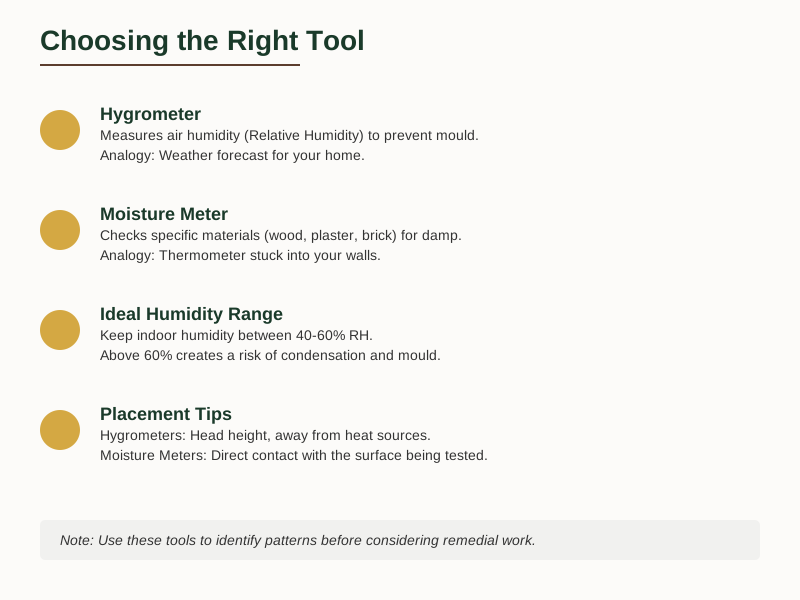
A hygrometer measures the moisture content in the air, expressed as relative humidity (RH). That’s the water vapour floating around your room, not the water sitting inside your walls. A moisture meter — specifically the pin-type most people buy — measures the moisture content in a material like wood, plaster, or brick.
The reason this matters is that mould grows on surfaces, not in the air. When warm, moist air inside your home touches a cold surface — a north-facing wall, a window pane, the back of a wardrobe — the moisture condenses. The surface gets damp. Mould grows.
So when you’re trying to prevent mould, you’re not actually trying to dry out your walls directly. You’re trying to stop the air getting humid enough that it deposits moisture on cold surfaces every time the temperature drops. That’s an air humidity problem, not a material humidity problem — which means it’s a hygrometer’s job to monitor it, not a moisture meter’s.
The analogy that helps: a hygrometer is like a weather forecast for your home — it tells you what’s likely to happen. A moisture meter is like a thermometer stuck into your walls — it tells you what already happened. One predicts; one diagnoses.
One thing worth knowing: it’s common for someone buying a moisture meter to check their floorboards to find the readings fluctuate wildly depending on exactly where they stand. That’s not a faulty device — it’s the tool telling you it’s measuring something very local and specific, not the general condition of the room.
If you’re trying to understand why mould keeps coming back, you need the forecast, not the post-mortem.
The Hygrometer vs. Moisture Meter Verdict
Here’s the call: for around 90% of UK homes dealing with condensation and mould, a hygrometer is the only tool you need. A moisture meter is a niche instrument with a specific purpose — and most people never need it.
The target range for mould prevention is 40–60% relative humidity. Below 40%, the air gets uncomfortably dry. Above 60%, you’re in the zone where condensation becomes likely on cold surfaces, and mould has the conditions it needs to grow. UK Building Research Establishment guidance supports keeping indoor RH below 60% to inhibit mould growth.
Here’s the mechanism that makes this work: surface relative humidity typically runs 5–10% higher than air relative humidity. What that means in practice is that even if your air RH sits at a comfortable 55%, the surface of a cold external wall might already be at 63% or 64% — above the mould threshold. Keeping your air RH below 60% gives you a buffer. Keep it below 55% and you’re in a genuinely safe zone for most UK homes.
The honest answer is that most people buying a moisture meter are buying it because they’ve been told they need to “check if the walls are damp.” But a moisture meter is only genuinely useful in two situations: first, when you’re trying to establish whether a stain on your wall is active damp or just a salt deposit from a previous leak; second, when you’re monitoring a wall drying out after a repair, to confirm moisture levels have returned to normal before you redecorate. Outside of those two scenarios, a moisture meter tells you about one specific spot in one specific moment — it doesn’t tell you whether your home as a whole is prone to condensation.
Placement matters more than most product guides admit. A hygrometer near a radiator will read artificially low. One sitting in a bathroom during a shower will read artificially high. The right spot is head height in your main living space, away from direct heat sources, cooking areas, or draughts.
Now you know what to look for — Get the Free Damp & Mould Diagnosis Checklist to work through the full picture of what’s causing the issue in your home.
How to Read a Hygrometer (and What the Numbers Mean)
Once you’ve got a hygrometer in the right spot, the numbers are straightforward — but the interpretation is where people often get muddled.
The ideal range is 40–60% RH. That’s the comfort and health band for most people and most homes. Below 40%, the air feels dry — you might notice respiratory irritation, static, or wooden furniture starting to crack. Above 60%, condensation becomes likely on cold surfaces, and mould has the conditions it needs.
What matters is the pattern, not the single reading. Your hygrometer will show you that humidity climbs through the day — cooking, showering, drying clothes indoors all push it up — and drops when windows are open or the heating’s on full. A reading of 65% at 9pm after everyone’s showered and dinner’s been cooked isn’t a crisis. A reading that sits above 60% first thing in the morning, before any activity, is the signal you need to act on.
The complaint that comes up again and again with budget hygrometers is placement sensitivity — readings that shift noticeably depending on where the device sits in the room. That’s not necessarily a fault; it’s the tool doing its job. What it tells you is that air humidity isn’t uniform across a space. Your bathroom might sit at 70% while your hallway is at 55%. For monitoring your main living space and bedroom, keep the hygrometer away from direct sunlight, radiators, or the kitchen door.
One practical note: digital hygrometers take a few hours to settle after you first set them up or move them. Don’t read too much into the first reading — check it again after a couple of hours.
Top Picks for Hygrometers (UK Market)
If you’re buying a hygrometer for general home monitoring, there are two models worth knowing about.
The ThermoPro TP50 (paid link) is the reliable, no-frills choice. UK buyers consistently praise its accuracy, clear display, and the magnetic back that lets you stick it to the fridge, a cabinet, or just about anywhere convenient. The display is easy to read, the setup is genuinely straightforward, and it does exactly what it says on the tin. The trade-off is that there’s no backlight — hard to read in a dark bedroom — and no smart features or alerts. Owners who’ve used it alongside other monitors note it can run around 8–12% off compared to some other devices, which is worth knowing if you’re expecting laboratory precision. For everyday monitoring of a bedroom, living room, or nursery, it’s more than good enough.
See it on Amazon → (paid link)
The Brifit Digital Hygrometer (paid link) is the budget Bluetooth option. The appeal is the app — you can check readings remotely, review history, and export data without being in the same room. Buyers who want to monitor conditions in a garage, a storage space, or a second property find this genuinely useful. The setup is fast and the compact size is convenient. Check the specified battery type and expected replacement interval if you want a monitor you can leave running for long periods.
If you just want the number without paying for a brand name, a generic digital hygrometer (eBay paid link) on eBay costs a few pounds and reads humidity just as accurately as the branded options above — you’re paying for build quality and features, not core accuracy.
The honest summary: if you want simple and reliable, the ThermoPro is the pick. If you want app connectivity and don’t mind keeping an eye on battery levels, the Brifit does the basics and adds the smart layer. Both are genuinely useful — neither is a gimmick.
When to Call a Professional
There’s a point where a hygrometer reading tells you there might be a bigger problem — and that’s when it’s worth getting proper advice.
If your hygrometer consistently shows humidity above 60% even when you’re ventilating properly and running a dehumidifier, that’s a sign there’s more moisture entering your home than normal daily activity would explain. A moisture meter reading that shows multiple walls consistently wet — not just one patch, but several areas — could indicate a leak, penetrating damp, or a failing damp-proof course.
The warning worth giving plainly: the UK damp-proofing industry has a well-documented problem with overselling. It’s a common pattern — a landlord or homeowner is quoted several thousand pounds for rising damp treatment, only for a hygrometer reading and a bit of investigation to show the real issue was condensation from poor ventilation, fixable far more cheaply with a dehumidifier and some trickle vent adjustments. That’s not an isolated story. Salt stains on walls look alarming but often indicate a past problem, not an active one. A moisture meter reading on its own doesn’t prove rising damp — and no tool you buy online is a substitute for a proper survey by an independent professional.
If you’re seeing efflorescence (white crystalline deposits on brickwork), crumbling plaster, or a damaged damp-proof course visible at the skirting board, that’s the point to contact the local council’s environmental health team or get an independent surveyor — not a damp-proofing firm that’s also quoting to do the work. For tenants, the route is reporting in writing to your landlord and keeping records. If the problem is serious and persistent, the council’s environmental health team can step in.
Frequently Asked Questions
What is the ideal humidity level for a UK home?
The ideal range is between 40% and 60% relative humidity. Keeping levels below 60% significantly reduces the risk of condensation on cold surfaces and the conditions mould needs to grow. For a bit more margin, aim for 45–55% if you have a history of mould in the property.
Can a moisture meter tell me if my home is damp?
A moisture meter measures moisture in a specific material — a wall, a floorboard, a piece of timber. It cannot tell you whether the air in your home is humid, which is the primary driver of condensation and mould. For monitoring the conditions that cause damp, a hygrometer is the right tool. A moisture meter is useful for checking whether a specific patch is actively wet or just a historic stain.
Where should I put my hygrometer?
Place it at head height in your main living space — the room where you spend most time. Keep it away from direct sunlight, radiators, the kitchen, or a bathroom during and immediately after a shower. It should be in the room’s general airflow, not tucked in a corner or right next to a heat source. The reading you want is the ambient condition of the space, not a localised extreme.
Hygrometer vs Moisture Meter: Key Differences
| Feature | Hygrometer | Moisture Meter |
|---|---|---|
| Measures | Air humidity (Relative Humidity) | Moisture in materials (wood, plaster, brick) |
| Primary Use | Preventing condensation and mould | Diagnosing active damp in specific spots |
| Analogy | Weather forecast for your home | Thermometer stuck into your walls |
| Typical Range | 40–60% RH | Varies by material (e.g., wood 12–20%) |
| Placement | Head height, away from heat | Direct contact with the surface being tested |
Note: This table provides a general comparison. Always consult manufacturer guidelines for specific device usage.
Taking the Next Step
The core message is straightforward: for most UK homes dealing with condensation and mould, a simple digital hygrometer is the tool that actually solves the problem. You don’t need to spend a fortune. You don’t need a moisture meter unless you’re checking a specific material after a repair. What you need is a clear reading of your air humidity, placed in the right spot, and a target of keeping it below 60%.
The moisture meter is a specialist tool. The hygrometer is the everyday instrument that tells you whether your home is doing what it should. Once you know the number, you know whether you need more ventilation, a dehumidifier, or just better habits around opening windows after a shower.
You don’t need to spend a fortune to understand your home. A decent hygrometer and a bit of attention to the reading is enough for most people to get on top of condensation for good.
Grab our free Damp & Mould Diagnosis Checklist to work through the full picture — what’s causing the moisture, what to check, and what to do about it.
Related Guides
For a complete overview, see our Do You Actually Need a Dehumidifier? When It Helps and When It Doesn’t .
Sources & Further Reading
- Building Research Establishment (BRE)
- National House Building Council (NHBC)
- Health and Safety Executive (HSE)
As an Amazon Associate we earn from qualifying purchases.
Note: This information is for general guidance only. Always verify specific dampness issues with a qualified professional or official source.
View Brifit Digital Hygrometer on Amazon → (paid link)