How to Report Damp and Mould to Your Council (With Rights)
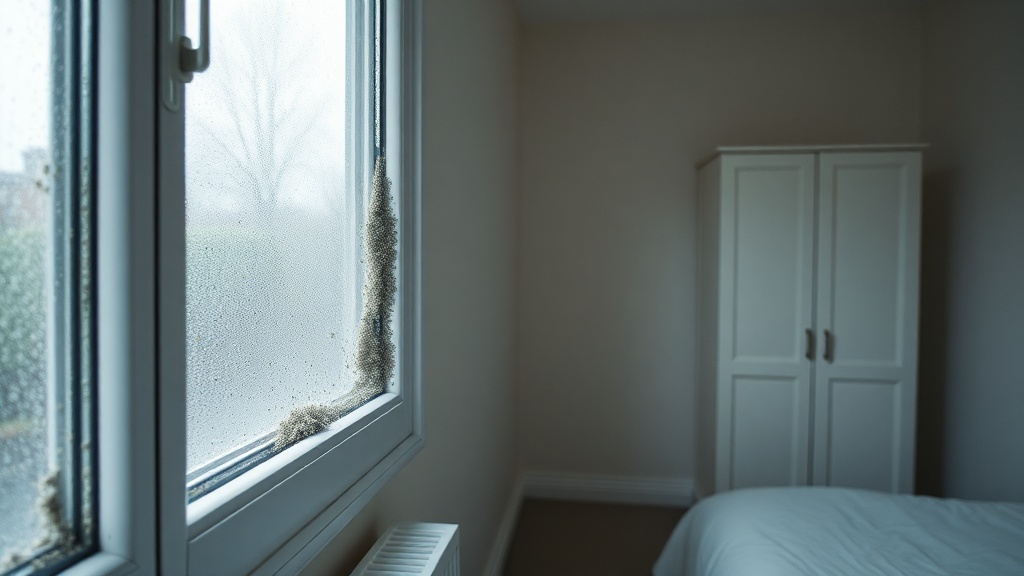
Your child is sleeping in a room with black mould spreading across the window frame, and the council keeps telling you it’s a routine repair. That gap between knowing something feels wrong and knowing exactly what your rights are is where council tenants get stuck for months, sometimes years.
The honest answer is that your rights as a social housing tenant are considerably stronger than most people realise. Awaab’s Law, the Housing Ombudsman, and the Regulator of Social Housing form a three-stage enforcement structure the council has to take seriously if you know how to use it. This guide walks through what your landlord is legally required to do, the timeframes you’re owed, and exactly what to write in a report the council cannot ignore.
The Legal Duty: What Your Council Must Do
Councils and housing associations have a statutory duty to keep your home fit for human habitation. That duty comes from the Homes (Fitness for Human Habitation) Act 2018, and it means your home must be free from serious damp and mould as a matter of law, not as a discretionary repair. If damp and mould is present to a degree that affects your health or makes the home unsafe to live in, the legal duty is triggered regardless of whether the council says it’s “just condensation.”
The timeframes attached to that duty are specific. If damp and mould presents an immediate risk to health and safety — for example, a baby sleeping in a room with active mould growth on the walls — the council must respond within 24 hours to make the situation safe. For cases that are serious but not a direct emergency, the council has 10 working days to investigate and begin the process of remediation.
These are not targets or aspirations. They are the standards the council agreed to when it accepted its regulatory obligations as a social landlord. Awaab’s Law, which comes into force for social landlords in England from 27 October 2025, puts these timeframes on a statutory footing. Before Awaab’s Law, councils could and did treat damp and mould as a routine maintenance item that sat in a queue for months. That position is now considerably harder to defend legally.
The question of what counts as an emergency is worth thinking through before you report. The 24-hour response is triggered when there is a clear and immediate health risk — a child or vulnerable person sleeping in a room with active mould growth, or damp so severe it is causing visible moisture on surfaces where it could affect breathing. Less urgent situations — a patch of mould on a bathroom ceiling that hasn’t spread recently — still warrant a report and still trigger the 10-day investigation window, but they are not the same as a health emergency. Getting this distinction right matters because it affects what you write in your report and how quickly you should expect a response. Not sure whether your situation qualifies as serious? That’s exactly what the Free Damp & Mould Diagnosis Checklist is designed to help you assess before you write anything.
Awaab’s Law: The New Standard for Social Housing
Awaab’s Law is named after Awaab Ishak, a two-year-old who died in 2020 from respiratory conditions caused by severe damp and mould in his family’s social housing flat. His death, and the subsequent coroner’s report, exposed how social landlords had been routinely treating damp and mould as a low-priority repair rather than a serious health hazard. The Social Housing Regulation Act 2023 incorporated Awaab’s Law specifically to change that.
From October 2025, councils and housing associations in England are legally required to treat reports of damp and mould as urgent health and safety matters — not routine maintenance. The practical effect is that a tenant reporting black mould in their child’s bedroom can no longer be told it will be scheduled in with the next round of planned maintenance. The clock starts on the day you report in writing, and the council must act within defined windows.
The shift matters more than the specific dates, because it changes the council’s internal classification system. Before Awaab’s Law, many councils categorised damp and mould as a Category B or Category C repair — important, but not urgent. That classification placed it in the same queue as a dripping tap or a cracked tile. Under Awaab’s Law, the category changes to something closer to a health and safety hazard, which means it has to be looked at faster, escalated differently, and cannot be quietly deprioritised when other repairs come in.
Some tenants have already reported faster response times since the law was announced and councils began updating their procedures in anticipation of the statutory deadline. Others are still experiencing delays — the law sets the standard, but enforcement still depends on tenants using the escalation tools available. Which brings us to what to do when the council doesn’t meet those standards.
The Escalation Path: When to Use the Housing Ombudsman
If the council fails to investigate within the 24-hour or 10-day window, or if it investigates and decides not to act, the next step is the Housing Ombudsman. This is a free service, and it has real teeth. The Ombudsman can investigate how the council handled your complaint, not just whether the damp and mould exists, and a finding of maladministration — essentially, that the council got it wrong in how it responded — means the council is legally required to comply with the Ombudsman’s decision.
The escalation trigger is simple: if the council ignores your written report, fails to investigate within the statutory window, or investigates and concludes there’s no problem when you believe there clearly is, you escalate to the Ombudsman. The path runs: report in writing to the council, follow their formal complaints procedure, and if that’s exhausted without resolution, contact the Housing Ombudsman.
What the Ombudsman can do is important to understand clearly. They can make the council take practical steps to fix the problem, they can require the council to pay you compensation, and they can issue a public finding of maladministration that affects the council’s regulatory standing. What they cannot do is force the council to carry out a specific repair on a specific day — the council has some discretion in how it complies with the decision, within limits.
The Ombudsman aims to resolve complaints within 12 weeks of accepting a case, though complex situations take longer. The process is not instant, and you should expect to wait — but during that time, a serious unresolved damp and mould case sitting with the Ombudsman is considerably more uncomfortable for the council than a complaint sitting in its own inbox. The 2021 Spotlight Report on damp and mould from the Housing Ombudsman found widespread failures in how social landlords handled these cases, and made specific recommendations that social landlords are now expected to follow. That report underpins the Ombudsman’s current approach, which is more interventionist than it was five years ago.
There’s a practical reality worth stating plainly: the Ombudsman is a complaints route, not an emergency repair service. If your child is sleeping in a room with active mould right now, the Ombudsman cannot get someone there this week. The 24-hour emergency route through the council is the right tool for that situation. The Ombudsman is the right tool when the council has had time to act and hasn’t.
Reporting in Writing: The Most Important Step
Every stage of the enforcement path — the council’s statutory duty, Awaab’s Law timeframes, the Ombudsman escalation — begins with a written report. A phone call, a note on the housing officer’s desk, or an email you can’t prove they received does not create the paper trail you need. Written reports create accountability. They have a date on them. The council cannot claim it didn’t know if you can show it received your email or posted your letter.
The template you need is straightforward. A formal report should include:
- Subject line — make it specific and include the word “formal”: “Formal complaint: damp and mould in [room], [address], [date]”. This signals that you know the process and you’re tracking it.
- Description of the issue — be specific about the location (which room, which walls, window frames or ceiling), when you first noticed it, whether it has spread, and who is affected. If children, elderly people, or anyone with a respiratory condition lives in the property, say so — it strengthens the health risk argument.
- Health and safety concern — explicitly state that you believe the condition makes the home potentially unfit for human habitation under the Homes Act 2018. You don’t need legal language; clear English is better.
- Request for action — request that the council inspects the property within the statutory timeframe and contacts you with a plan for remediation.
- Evidence — attach dated photographs. Take them from the same angles each time so you can demonstrate how the problem has developed or worsened. Keep a copy of everything you send.
After you report, log every follow-up interaction: the date and time you called or emailed, the name of the person you spoke to, and a brief note of what was said. If the council sends someone to look at the property, ask for a copy of their report. These records are what make an Ombudsman case strong rather than speculative.
The Regulator of Social Housing (RSH)
Awaab’s Law and the Housing Ombudsman are the two tools most relevant to an individual tenant’s case. The Regulator of Social Housing (RSH) sits above them both, but in a different way — it regulates landlords, not disputes.
The RSH can issue fines and take enforcement action against social landlords for systemic failures: patterns of neglect that affect multiple properties, consistent failure to meet regulatory standards, or practices that fall below what the RSH expects of a registered social housing provider. If you have evidence that the damp and mould problem is not just yours but is widespread across an estate or block — multiple tenants affected, multiple reports made, no action taken — the RSH is the body that can investigate that pattern.
It does not intervene in individual disputes. The RSH will not order the council to fix your specific damp patch, and it will not speed up your individual complaint. Approaching the RSH when your issue is a single property problem is a misdirection that wastes time and energy. Keep the RSH in mind if you are part of a group of tenants all experiencing the same failure — that is exactly what its regulatory powers are designed for.
Council Response Timeframes
| Situation | Required Response Time |
|---|---|
| Immediate health risk (e.g., baby in mouldy room) | 24 hours |
| Serious but not an emergency | 10 working days |
| Routine maintenance (pre-Awaab’s Law) | Variable / months |
| Housing Ombudsman investigation | 12 weeks (aim) |
Frequently Asked Questions
What should I do if the council says it’s just condensation?
The council can’t simply reclassify damp and mould as your problem because it attributes the cause to condensation. Under the Homes Act 2018, the landlord is responsible for the condition of the property — if the property has a ventilation defect, a heating failure, or a moisture penetration problem that causes condensation to build up to the point where it leads to mould, that is still the landlord’s duty to investigate and address. Report it in writing, make the argument explicitly, and if they decline to act, that refusal becomes part of your paper trail for the Ombudsman. The key question is whether the home is being kept in a condition that allows it to be lived in safely — and excessive condensation that causes mould is a reasonable argument that it is not.
Can I withhold rent if the damp is serious?
This is genuinely complex and getting it wrong can put your tenancy at risk. Withholding rent without a formal legal basis is a breach of your tenancy agreement and can be used as grounds for eviction. Before doing anything like this, speak to Shelter or a housing adviser — they can tell you whether a rent reduction or repayment order through the courts is the right route in your specific situation. The short answer is: don’t withhold rent without legal advice first. The longer answer is that there are legitimate mechanisms for seeking a rent reduction when a property is not being maintained to the required standard, and those are worth exploring properly.
Does Awaab’s Law apply to private landlords?
No. Awaab’s Law specifically applies to social landlords — councils and housing associations. Private tenants have different rights under the Homes (Fitness for Human Habitation) Act 2018, which is the same Act but applied differently, and private tenants generally pursue enforcement through the courts rather than through the Housing Ombudsman. If you are a private tenant dealing with damp and mould, the route is different and you should speak to Citizens Advice or Shelter about the specific enforcement options available to you.
How long does it take for the Housing Ombudsman to investigate?
The Ombudsman aims to resolve complaints within 12 weeks of accepting a case, but this varies depending on the complexity of the case and how much evidence needs to be reviewed. Complex cases with multiple tenants or large amounts of correspondence can take longer. During the investigation, you may be asked to provide additional information — keeping your own records from the start makes this much easier. You should contact the Ombudsman after you have exhausted the council’s own formal complaints procedure, not before.
What if the damp is caused by a leak from a neighbour’s property?
You still report it to your landlord — your council tenancy agreement means the council is responsible for dealing with issues that affect your home, including investigating where the source lies. If the leak originates from another council or housing association property, your landlord has a duty to pursue that. If the source is a private property, the council’s environmental health team has powers to investigate the neighbour. The route for you as a tenant remains the same: report in writing to your landlord, give them the evidence, and give them a timeframe to act.
Where to Go From Here
You now know what the council has to do, the specific timeframes it has to do it in, and exactly what to write so that it cannot pretend it didn’t know. The enforcement path — report in writing, follow the complaints procedure, escalate to the Housing Ombudsman if needed — is not complicated, but it requires you to be systematic about keeping records.
The single most important thing you can do right now is stop relying on phone calls and messages that disappear into a housing officer’s inbox. The paper trail is the mechanism that makes everything else work. Awaab’s Law gives you the statutory timeframes. The Ombudsman gives you a free, powerful escalation route that the council has to take seriously. And the Regulator of Social Housing exists for the situations where the failure is not just yours but systemic — if others are experiencing the same thing, that is worth knowing too.
You are not powerless in this situation. The law is on your side. The honest answer is that knowing your rights is different from knowing how to use them — and knowing the reporting process, having the template, and understanding the escalation path is what turns a statutory duty into something the council actually has to respond to.
Not sure whether your situation is serious enough to report? Work through the Free Damp & Mould Diagnosis Checklist — it helps you document what you’re seeing in your home so you can describe it clearly and accurately when you report it.
Related Guides
For a complete overview, see our Landlord Responsibilities for Damp and Mould: What UK Law Says .
Sources & Further Reading
Note: General guidance only. Verify details with a qualified professional or official source.