Dehumidifier Deals: What's Worth Buying in the Sales
As an Amazon Associate we earn from qualifying purchases. This page contains affiliate links — if you buy through them, we earn a small commission at no extra cost to you.
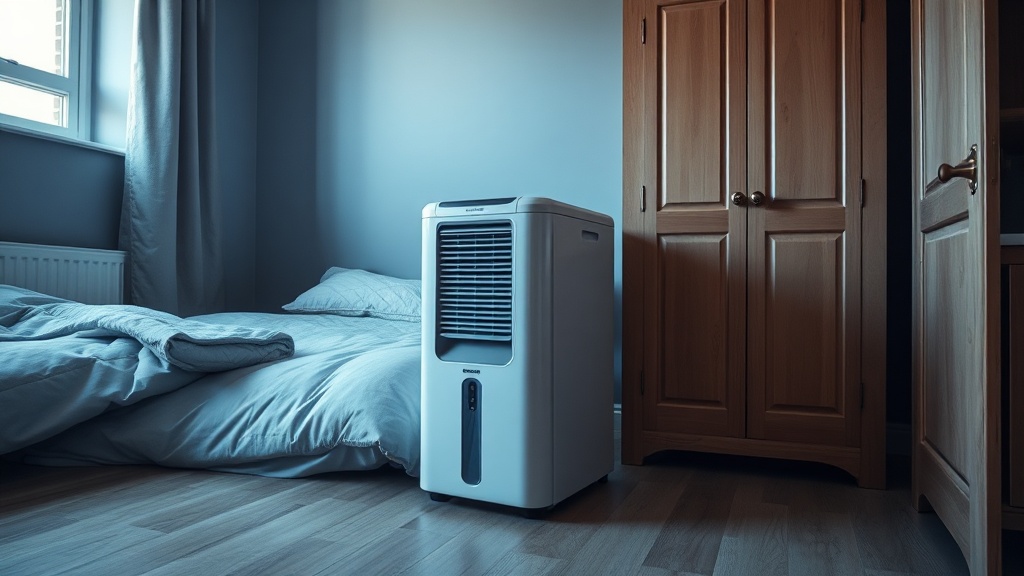
You see it on the shelf: a bright yellow sticker, 50% off, on a tiny dehumidifier that barely reaches your knee. It looks like a bargain. For a moment, you wonder if this is the time to fix the condensation on your bedroom windows once and for all.
The catch is that discount is probably genuine, but the machine is still the wrong tool for the job. Size is the step most buyers skip in the rush to grab a deal.
This article cuts through the sales noise by focusing on what actually removes moisture from a room—and why the biggest percentage-off figure isn’t the same as the best value. You’ll know which deals are worth your time, which are wardrobe-sized traps, and how to spend your budget on something that will actually clear the mould.
The “Big Discount” Trap
Here’s how Black Friday and Prime Day dehumidifier deals actually work. Retailers discount outgoing-generation stock hardest—that’s just how retail cycles operate. For dehumidifiers, that means older but perfectly capable compressor models get the biggest price cuts. The underlying moisture-removal mechanism hasn’t changed fundamentally in years; a 2023 model pulls water from the air just as well as a 2025 model. It’s nothing like phones, where last year’s processor genuinely feels slower.
The trap is this: alongside those genuine last-gen compressor deals, retailers also discount the small stuff—the 500ml and 1-litre mini units designed for wardrobes, caravans, and small cupboards. They put those tiny models right next to the big stickers. A 50% discount on a 1-litre unit still leaves you with a machine that can barely handle a spare room, let alone a bedroom where condensation is settling on the walls every morning.
If you live in a flat and buy a 1-litre unit, you’ll be emptying the tank every single day. If you buy a properly sized 12-litre unit, you can run it for weeks before it needs attention. That’s the size difference in practical terms, and no percentage-off sticker changes it.
The honest answer is that the biggest discount figure is not the same thing as the best value. For whole-room moisture control in a typical UK home, you want a compressor unit rated at 12 litres or above—and you want to look for last-gen Ebac or Meaco models that have dropped in price because a newer series has arrived.
Not sure if you need a dehumidifier at all? Before you buy, check your actual humidity levels—a cheap hygrometer tells you whether the problem is real and how bad it is. Get the Free Damp & Mould Diagnosis Checklist to verify before spending.
Why Last-Gen Compressors Are the Honest Value Pick
A last-generation compressor dehumidifier is the honest value pick in any sales event. These are machines retailers need to shift to make room for the new range, so the discounts tend to be meaningful—20%, 30%, sometimes more. The moisture-removal performance hasn’t changed, because compressor technology for domestic use reached a functional plateau several years ago. What changes between generations is display design, control layout, and smart features—not how much water the machine pulls from the air.
Look for last-gen tags on Ebac and Meaco models specifically. Both brands are established in the UK market and have decent service networks. The Ebac 2650e (paid link) is a model that comes up repeatedly in owner feedback for its reliability. It’s a compressor unit, so it works best in rooms above roughly 15°C, but for a heated bedroom or living room in a UK winter, that’s not a practical limitation.
The trade-off with last-gen is that you’re buying a model without the latest smart controls or app integration. For most people, that’s not a meaningful loss. You set the target humidity, the machine runs, you empty the tank. You don’t need a smartphone app to achieve that.
Which? testing methodology verifies brand performance across a range of conditions, and the established names—Meaco, Ebac—tend to hold their performance ratings across generations. That’s the practical value of buying from a known brand rather than chasing the newest thing on a discount shelf.
For sizing: a 12-litre compressor unit covers a standard UK bedroom or small flat adequately. A 20-litre unit handles a larger room or a whole flat. If you’re unsure which size you need, How to Choose a Dehumidifier has a full breakdown.
Smart Upgrades: When to Pay More
Smart features—app control, humidity sensing, automatic mode switching—are nice to have, not essential for the core job of removing moisture. If you want them, you’ll pay for them, and the question is whether the convenience justifies the premium for your situation.
Meaco is the UK’s leading provider of dehumidifiers, and their Arete One range has picked up industry recognition including the Product of the Year award in 2025. The 12-litre model in that range is consistently praised in owner feedback for quiet operation, effective moisture removal, and a laundry-drying mode that brings clothes in from the line in winter without running the tumble dryer.
The honest trade-off is this: you’re paying more for quieter operation, a more refined build, and features that make the machine easier to live with day to day. If you’re running a dehumidifier in a bedroom overnight, those things matter. If you’re running it in a utility room while you’re out, they matter less.
The laundry-drying mode is worth mentioning separately, because it’s the feature that most buyers actually use. A dehumidifier running in a small room with wet clothes is significantly cheaper to run than a tumble dryer, and it doesn’t shrink your favourite jumper. For a household trying to cut energy costs, that feature alone can justify the upgrade price over a budget model.
For more on keeping the air dry and mould-free once you have the right machine, see How to Prevent Mould .
The Budget Option: What You’re Trading Off
If your budget is tight or your moisture problem is mild, there are practical options below the premium tier. The EcoAir ECO20LDG (paid link) is a compact compressor unit that comes up in owner feedback for pulling moisture fast, reducing window condensation, and drying laundry more quickly than expected for the price. It’s the honest budget pick for a smaller flat or a bedroom with a manageable condensation problem.
What you trade off for the lower price is noise and maintenance frequency. Owner complaints cluster around a droning, fridge-like sound that some find intrusive for overnight use, and a tank that needs emptying more often than the larger premium models. The display is also harder to read, and the lack of a carry handle makes moving it around a bit of a faff. For light, occasional use, these limitations are manageable. For daily overnight running in a bedroom, they’re the difference between a machine you barely notice and one that keeps you awake.
The practical call is this: if your damp problem is mild condensation on windows in a spare room, the budget model is worth considering. If you’re dealing with persistent mould on walls or a flat where condensation is a daily problem, the extra spend on a properly sized premium unit pays back in reliability and quietness.
For renters dealing with damp that a dehumidifier alone won’t solve—persistent black mould, cold walls, a landlord who isn’t responding—the route is to report it in writing and contact the council’s environmental health team if needed. You can read more about that in the Renter’s Guide to Damp .
Hygrometers: The Secret Weapon for Sales
Before you buy a dehumidifier—during a sale or otherwise—spend under £10 on a hygrometer. This is the tool that tells you whether you actually have a moisture problem, how bad it is, and whether the machine you buy is actually fixing it.
The ThermoPro TP50 (paid link) is the one that comes up most reliably in owner feedback for accuracy, easy setup, and a clear display. The magnetic back is handy for attaching it to a fridge or a cabinet, and buyers consistently describe it as good value for monitoring temperature and humidity around the home. One detail worth knowing: it doesn’t have a backlight, which makes it harder to read in a dark room at night—not a dealbreaker, but something to be aware of.
See current price on Amazon → (paid link)
The point of a hygrometer isn’t just to confirm a problem exists. It tells you whether the dehumidifier is working. You set a target—50-60% relative humidity is the range most people aim for—and you can see whether the machine is actually getting there. Without that, you’re running a device on faith, and you have no way to know whether you bought the right size.
For a more detailed look at checking your home’s moisture levels, see How to Check Damp .
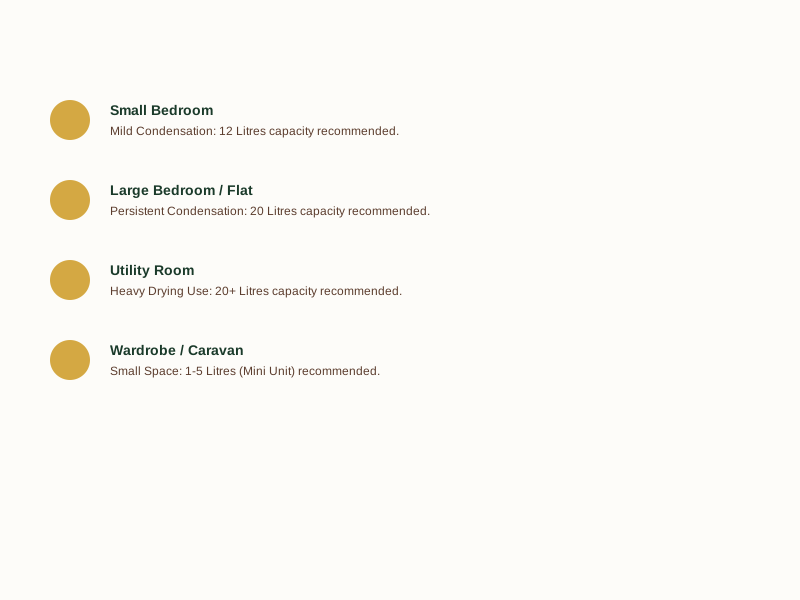
Dehumidifier Size Guide
| Room Size | Moisture Load | Recommended Capacity |
|---|---|---|
| Small Bedroom | Mild Condensation | 12 Litres |
| Large Bedroom / Flat | Persistent Condensation | 20 Litres |
| Utility Room | Heavy Drying Use | 20+ Litres |
| Wardrobe / Caravan | Small Space | 1-5 Litres (Mini Unit) |
Frequently Asked Questions
Are dehumidifier deals on Black Friday genuine?
Yes, particularly on last-generation compressor models from established brands. The discounts are real because retailers need to clear older stock. The risk is buying a heavily discounted mini unit that’s too small for a whole room—the discount is genuine, but the product is the wrong tool for the job.
Is a dehumidifier cheaper than a tumble dryer?
Generally, yes, particularly if you use it regularly for laundry drying. A dehumidifier running in a small room with wet clothes uses significantly less energy than a tumble dryer and doesn’t damage fabrics the same way. The saving is most noticeable over a full winter of indoor drying.
Do I need a smart dehumidifier?
No. Smart features—app control, humidity sensing, automatic mode switching—are a convenience, not a requirement for moisture removal. A standard humidistat model does the core job just as well for considerably less money. The premium is worth it if you value quiet operation and want the machine to run overnight without thinking about it.
What size dehumidifier do I need for a bedroom?
A 12-litre compressor unit is typically sufficient for a standard UK bedroom. For a larger room, a master bedroom, or a flat with ongoing condensation problems, a 20-litre unit is the better choice. If you’re unsure, a cheap hygrometer tells you whether the problem is mild or significant before you spend.
Taking the Next Step
The best dehumidifier deal is not the one with the biggest percentage-off sticker. It’s the one that’s the right size for your space, from a brand with a decent track record, and actually capable of handling the moisture load in your home. Last-generation compressor models from Meaco and Ebac are where the genuine value tends to hide during sales events—they perform just as well as the newer range, and the discount is real.
Mini units at 50% off are not a bargain for a bedroom or a flat. They’re the wrong size for the job regardless of the price.
Before you buy anything, check your humidity levels so you know what you’re actually dealing with. That way, the sale works for you—you spend on the right size, not the biggest discount.
Get the Free Damp & Mould Diagnosis Checklist to verify your moisture situation before spending on a machine.
Related Guides
For a complete overview, see our Do You Actually Need a Dehumidifier? When It Helps and When It Doesn’t .
Sources & Further Reading
As an Amazon Associate we earn from qualifying purchases.
Note: General guidance only, verify details with a qualified professional or official source.
Check EcoAir ECO20LDG price → (paid link)
See Ebac 2650e on Amazon → (paid link)