Do You Actually Need a Dehumidifier? When It Helps and When It Doesn't
As an Amazon Associate we earn from qualifying purchases. Some links on this page are affiliate links, which means we may earn a small commission if you make a purchase.
You’ve spotted black marks on the bedroom wall. Maybe a musty smell, too. Your first instinct is probably to Google “best dehumidifier for mould” and spend £150 on whichever machine comes up top of the results.
Before you do, here is the honest truth: a dehumidifier is a tool with a very specific job, and it does that job brilliantly. But it is also the wrong answer to a whole range of moisture problems that look similar from the outside. Buy the wrong tool for the wrong problem and you have spent money, the mould still comes back, and now you have a dehumidifier you didn’t need.
The fix isn’t buying something; it’s knowing what you are actually dealing with first. This article gives you that framework — and a clear verdict on when a dehumidifier is genuinely the right call.
How Dehumidifiers Actually Work (And Why They Heat the Room)
Think of a dehumidifier like a fridge. It draws air in, cools it until the water vapour condenses into liquid, drips into a tank, and then pumps the now-drier air back out. The moisture hasn’t vanished — it has been collected.
There are two main types. Compressor dehumidifiers work the same way a fridge does — they cool the air to condense the moisture out. Desiccant dehumidifiers use a hygroscopic wheel instead, which absorbs water from the air and then releases it when heated. Both remove moisture from the air; they just use different mechanisms to do it.
One thing worth knowing upfront: the condensation process releases heat as a by-product. A running dehumidifier will make a small room feel a degree or two warmer — which is genuinely useful in a cold British winter but does mean you are paying for dehumidification and heating in one device. Whether that is a bonus or a problem depends on the season.
Buyers consistently report that effective moisture removal makes rooms feel more comfortable, and the heating effect is noticeable in unheated spare rooms or poorly insulated spaces. The feature that comes up most often in owner feedback is the laundry mode — a setting that runs the machine continuously to dry clothes indoors — and it is the one function most buyers say justifies the purchase.
The Diagnosis: Is It Condensation or Damp?
Here is where most people go wrong. They see mould on a wall and assume “damp” — then assume a dehumidifier is the fix. But “damp” isn’t one problem. It is at least three completely different problems that need completely different solutions.
Condensation happens when moisture created inside the house — from breathing, cooking, showering, or drying clothes — meets a cold surface and turns back into water. It is an indoor humidity problem. A dehumidifier can fix this because it removes the moisture the house is generating.
Penetrating damp happens when water gets into the fabric of the building from outside — through a crack, a failing render, a missing tile, or a leaking pipe. The moisture isn’t coming from inside; it is coming from the street. A dehumidifier can’t stop water entering through a crack. You would be drying the sea.
Rising damp is moisture drawn up from the ground through the walls by a failed or missing damp-proof course. Same problem as penetrating damp from a machine’s perspective — the source is outside the house, not inside it.
The Energy Saving Trust’s position is direct: dehumidifiers are effective for localised condensation but are not a substitute for ventilation. That is the honest summary of what the evidence says.
Here is a quick self-check to separate them. Answer yes or no:
- Are the damp patches on walls that are cold (external walls, north-facing walls)?
- Do they get worse when you cook, shower, or have people round?
- Do you dry clothes indoors without an extractor fan going?
- Is the problem worse in winter when windows are closed?
If you answered yes to most of those, the moisture is internal — condensation. A dehumidifier is a reasonable tool for this.
Now flip it:
- Are the damp patches appearing regardless of what you do indoors?
- Is there water ingress after rain specifically?
- Do the walls feel wet deeper than the surface?
- Is there a musty smell even in rooms you barely use?
If those are yes, the moisture is coming from outside. A dehumidifier won’t fix it — and more importantly, you would be spending money on the wrong problem while the real one gets worse.
The honest answer is that most UK household damp is condensation, not structural damp. But the minority of cases that aren’t condensation are the ones where an expensive purchase makes things worse, not better — because you think you have addressed it and haven’t. Before spending £150–£400, it is worth knowing which situation you are in.
Now you know what to look for — Get the Free Damp & Mould Diagnosis Checklist to confirm the source before you buy anything.
When a Dehumidifier IS the Right Choice
There are two situations where a dehumidifier genuinely earns its keep.
Indoor laundry drying. This is the use case that comes up most in real owner feedback. If you don’t have a tumble dryer and drying clothes outdoors isn’t practical — and in a British autumn and winter, it frequently isn’t — a dehumidifier with a laundry mode can genuinely transform how quickly washing dries. Owners consistently report it as the feature that makes the purchase feel worthwhile rather than a waste of money. You close the door, set it to laundry mode, and come back to find the clothes dry within the day, without moisture having settled into your walls.
Single-room localised condensation. A dehumidifier works well in a sealed or semi-sealed room where the moisture source is predictable and contained. A spare bedroom with condensation on the windows after a shower. A bathroom without an extractor fan. A flat where the building’s ventilation just isn’t coping with winter humidity. In these situations, running a dehumidifier for a few hours a day keeps the humidity below the point where mould starts growing — roughly below 70% relative humidity, which is where NHS guidance says condensation and mould risk increases.
Prices for a decent compressor dehumidifier typically run from around £80 for a basic model up to roughly £250–£400 for something with better build quality, quieter operation, and a proper laundry mode. The jump in price mostly buys you quieter running and better moisture extraction — worth it if you are running the machine overnight in a bedroom, less critical if it is in a utility room.
The Meaco Arete One 12L (paid link) is the model that comes up most frequently in positive UK owner feedback — praised for quiet operation, effective moisture removal, and a laundry mode that genuinely works. It is not cheap, but owners who have had cheap alternatives tend to describe the step up in quality as worthwhile. For smaller spaces, the EcoAir DC12 (paid link) gets consistent praise as a practical, good-value option — effective enough for a flat or small house, quieter than average, and easier to move around.
View on Amazon → (paid link)
When Ventilation Beats a Dehumidifier
Here is the situation where a dehumidifier is the wrong call, and most people never realise it.
If your whole house has a condensation problem — not just one room, but throughout — a single dehumidifier is fighting physics. A dehumidifier removes moisture from the air in the room it is in. It can’t address moisture in rooms you haven’t put it in. And it can’t work if your house is draughty — because as fast as it removes moisture from the air, new moisture-laden air is being drawn in through gaps around windows, doors, and vents. You would be dehumidifying the street.
Whole-house condensation needs whole-house ventilation. That sounds expensive and technical but it doesn’t have to be. At its simplest: open windows on opposite sides of the house to create a cross-draught for 10–15 minutes a day, even in winter. Use extractor fans in the kitchen and bathroom and make sure they vent to the outside air — not into the loft. Make sure trickle vents in window frames are open. If the house is a solid-wall Victorian or Edwardian terrace — and if you are reading this in the UK, there is a good chance it is — then the original ventilation has been sealed up by double glazing and new doors, and the moisture that used to escape through those gaps now has nowhere to go.
For persistent whole-house humidity, a Positive Input Ventilation (PIV) unit is worth considering. It draws air from outside into the house, creating positive pressure that pushes moist air out through gaps and vents. It is more effective than a dehumidifier for whole-house problems, and cheaper to run long-term because it uses a small fan rather than a compressor.
The thing is, ventilation addresses the root cause. A dehumidifier manages the symptom — it removes moisture that is already there. Ventilation stops moisture accumulating in the first place. If your problem is whole-house, ventilation is the real fix. A dehumidifier is a sticking plaster.
Frequently Asked Questions
Can a dehumidifier stop mould?
It can reduce the conditions that allow mould to grow, but it won’t stop mould if the underlying moisture source isn’t fixed. If the moisture is coming from a leak or rising damp, the humidity in the room will keep coming back no matter how long you run the machine. Lowering relative humidity below around 60–65% does inhibit mould growth, but that only works if you have addressed where the moisture is actually coming from.
Should I run a dehumidifier all day?
Only if you have a specific, ongoing moisture source — like drying laundry every day or a room that is permanently poorly ventilated. For most people with general condensation, running it for a few hours after cooking or showering is enough. Letting fresh air in when you can is usually more effective and costs nothing to run.
Is it cheaper to run a dehumidifier than a heater?
Dehumidifiers can make a room feel warmer because of the heat released during the condensation process, and they are generally more efficient at heating than a direct electric heater — but they still use power. If your primary goal is heating a cold room, a proper heater is more straightforward. If your primary goal is removing moisture, a dehumidifier does that while also adding a bit of heat. For whole-house condensation, ventilation is the most energy-efficient approach overall.
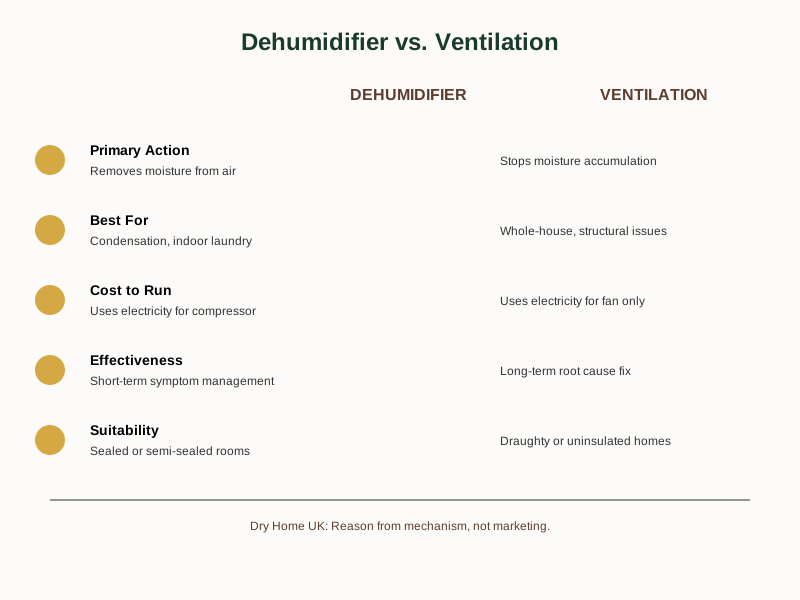
Dehumidifier vs Ventilation: The Core Difference
| Feature | Dehumidifier | Ventilation |
|---|---|---|
| Primary Action | Removes moisture from the air | Stops moisture from accumulating |
| Best For | Localised condensation, indoor laundry | Whole-house humidity, structural issues |
| Cost to Run | Uses electricity for compressor/fan | Uses electricity for fan only |
| Effectiveness | Short-term symptom management | Long-term root cause fix |
| Suitability | Sealed or semi-sealed rooms | Draughty or poorly insulated homes |
Taking the Next Step
The single most important thing to take away from this article: a dehumidifier is not a cure for damp. It is a tool for a specific situation — internal moisture in a reasonably sealed room, or indoor laundry drying — and in those situations it is genuinely useful. For everything else, it either won’t work or isn’t the best option.
Before you spend anything, it is worth knowing which situation you are in. Most UK household moisture problems are condensation — and condensation is fixable with the right combination of a dehumidifier where it helps, ventilation where it is needed, and a few habits changed. But the small proportion of problems that are structural — leaks, failing damp-proof courses, penetrating damp — need a proper survey, not a machine.
If you are not sure which camp you are in, that is exactly what the free checklist is for. Get the Free Damp & Mould Diagnosis Checklist — it walks you through the key signs to separate condensation from the problems that need a different kind of help.
Explore More Topics
Go deeper on specific topics:
- Compressor vs Desiccant Dehumidifier: Which Works in a Cold UK House
- What Size Dehumidifier Do I Need? Room-by-Room Guide UK
- Dehumidifier Running Costs: How Much Electricity Do They Use?
- Hygrometer and Moisture Meter: How to Monitor Humidity at Home
- Dehumidifier Deals: What’s Worth Buying in the Sales
Sources & Further Reading
As an Amazon Associate we earn from qualifying purchases.
Note: This information is for general guidance only. Always verify specific damp issues with a qualified professional or official source.
See EcoAir DC12 on Amazon → (paid link)