Does Vinegar Kill Mould? What Works Better on UK Walls
As an Amazon Associate we earn from qualifying purchases. Some links on this page are affiliate links, which means we may earn a small commission if you make a purchase.
You scrub the black mould off your bathroom wall, let it dry, and within a week it’s back. You grab the bottle of white vinegar, thinking it’s the natural, safe fix, but the cycle repeats. The problem isn’t the cleaner you’re using — it’s the surface you’re using it on.
In UK homes, where cold walls and condensation are the norm, this is a common frustration. The truth is, vinegar isn’t the magic bullet many people think it is for porous painted walls. Understanding why means looking at how mould actually grows in the first place.
Why UK Homes Get Mould (And Why It Keeps Coming Back)
Mould is a fungus that thrives in damp, humid places, especially where there’s condensation. Cold air holds less moisture than warm air, and when it hits a cold wall, the water vapour turns to liquid on the surface. That’s condensation. Microscopic spores are always present in the air in any UK home, and on a cold wall with still, moist air, those spores have everything they need to grow.
The critical point that most cleaning guides skip is this: mould is a symptom of excess moisture, not the root cause. You can scrub, spray, and wipe every black patch off your walls, but it will return if the room stays damp. In older solid-wall Victorian and Edwardian terraces, cold bridging at corners and behind furniture is especially pronounced. Those external walls lose heat fast, making them prime condensation spots even when the rest of the room feels reasonably warm.
For tenants in social housing, this matters beyond the cleaning cupboard. Awaab’s Law — brought in under the Social Housing Act — means landlords in England have a legal duty to address serious damp and mould hazards promptly. If you’re renting and the mould keeps coming back no matter how much you clean, that’s worth knowing before you spend another weekend scrubbing.
If you’re not sure whether you’re dealing with condensation or something else — a leak, say, or rising damp — our guide to how to tell damp from condensation is worth ten minutes of your time before you spend money on the wrong fix.
The Vinegar Myth — What It Actually Does
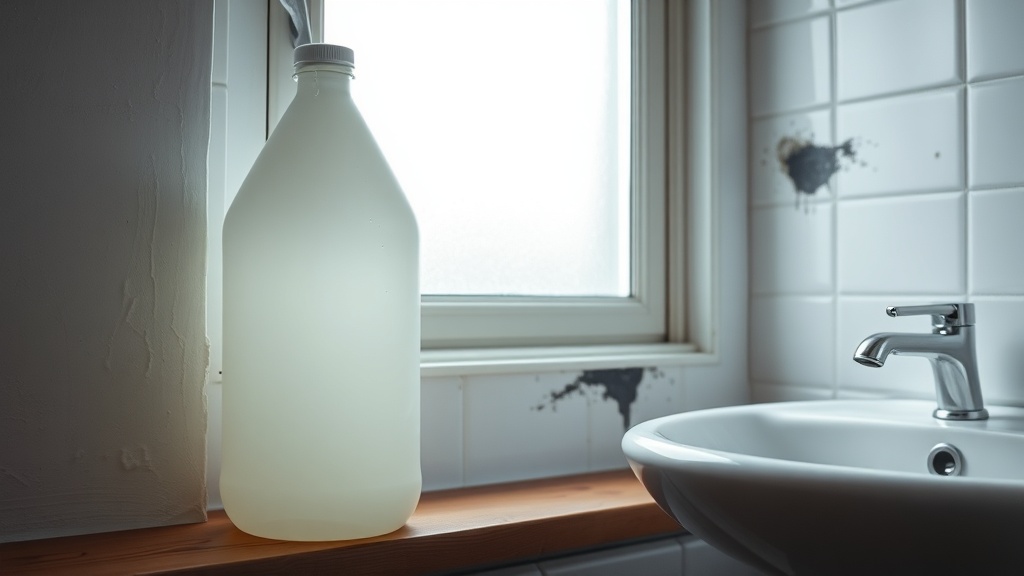
Vinegar is a mild acid, typically around 5% acetic acid. On contact with mould, that acidity disrupts the cell membranes, which is why it can kill a meaningful proportion of common mould species. On non-porous surfaces — tiles, glass, sealed stone, shower screens — this works well enough. The vinegar sits on the surface, does its work, and you’re left with a clean patch.
On painted plaster or wallpaper, it’s a different story. The mould on a porous wall doesn’t just sit on the surface; its root structure, the hyphae, penetrates the paint layer and works down into the plaster itself. Vinegar evaporates quickly, sitting on the surface for minutes at most before it’s gone. It never reaches the roots. The visible mould dies back, the patch looks clean for a day or two, and then the hyphae send up fresh growth. This is the cycle people describe again and again: scrub, treat, watch it return within a week or two.
Vinegar isn’t a bad cleaner for light surface mould on hard, non-porous surfaces. If you’ve got mould on your shower glass or around the silicone sealant on a bath, vinegar is a reasonable first step. It’s natural, low-toxicity, and cheap. The mistake is applying the same logic to a painted bathroom wall or ceiling, where the surface is absorbent and the roots run deep.
A quick word on ventilation: if you’re treating any surface mould without addressing the air movement in the room, you’re fighting with one hand tied behind your back. Our guide to how to ventilate a room covers the practical steps that actually make a difference.
The Honest Verdict: Vinegar vs. Other Treatments
Here’s the verdict: it’s a trade-off rather than a clean win for one product.
Vinegar wins on safety and cost for light, regular cleaning on non-porous surfaces. It’s natural, non-irritating, and you probably already have it in the cupboard. For tiles, glass, and sealed surfaces, it’s a reasonable option. But it loses on long-term efficacy for porous painted walls — it doesn’t penetrate, it doesn’t kill the roots, and the mould comes back.
Bleach — typically sodium hypochlorite — is a strong oxidising agent that chemically destroys organic matter. For surface mould on non-porous materials, it’s effective: it kills what it touches, and it does it fast. Products like HG Mould Remover (paid link), which contain bleach or hydrogen peroxide, tend to perform better on bathroom tiles and grout than vinegar does, and owner reviews consistently note results in ten to thirty minutes. The catch is the same as vinegar: bleach cannot penetrate porous plaster, so roots survive. It also releases fumes that can irritate eyes and respiratory passages, which matters in a small bathroom with poor ventilation.
See current price on Amazon → (paid link)
Scrubbing and washing physically removes surface mould, which makes the room look better immediately. But it doesn’t kill the roots, and recurrence is typical, particularly in autumn and winter when condensation is at its worst.
Vacuuming — you might be tempted to hoover up the spores — is the wrong call. Spores are fine enough to pass through most vacuum filters and bags, and the suction disturbs and disperses them into the air you’re breathing. Don’t do it.
The flip condition is this: if the mould has roots embedded in porous plaster — which is the case for most recurring black mould on painted bathroom walls and bedroom corners — no surface treatment permanently solves it. You can buy HG Mould Remover (paid link), Dettol Mould & Mildew, or Astonish Mould & Mildew (paid link) and they’ll all outperform vinegar on surface cleaning. But the only permanent fix is stopping the moisture source.
Not sure if you’re dealing with condensation, a leak, or something structural? That’s exactly what our free damp and mould diagnosis checklist is designed to help with.
What Actually Works on UK Walls (Beyond Cleaning)
The honest answer is that the fix isn’t a product — it’s a change in how the room handles moisture.
Practical steps that make a real difference:
- Use the extractor fan every time you shower or cook, and leave it running for at least twenty minutes afterwards.
- Open windows briefly each day, even in winter — ten minutes of cross-ventilation removes a surprising amount of moisture.
- Keep rooms warm enough that walls don’t drop well below the room’s ambient temperature. You don’t need to heat empty rooms to 20°C, but letting them go cold and damp is what mould loves.
- Keep bathroom and kitchen doors closed while cooking or showering, then open them and the windows once you’re done — you’re stopping moist air spreading into the rest of the house.
- If you dry clothes indoors, use a dehumidifier alongside it. Condensation on windows from a clothes horse is a significant moisture load.
If the mould is severe — covering a large area, returning rapidly despite consistent ventilation and heating, or showing signs of damp getting into the plaster itself — that’s the point where an independent survey makes sense rather than another tin of mould spray. Our guide to how to choose a dehumidifier covers the practical options if you want to tackle the moisture load directly.
If you’re a tenant and the landlord isn’t acting on reports you’ve made, keep records of everything, put future reports in writing, and contact your local council’s environmental health team. They have powers to compel action, and under Awaab’s Law, social landlords in England face specific duties on serious damp and mould hazards.
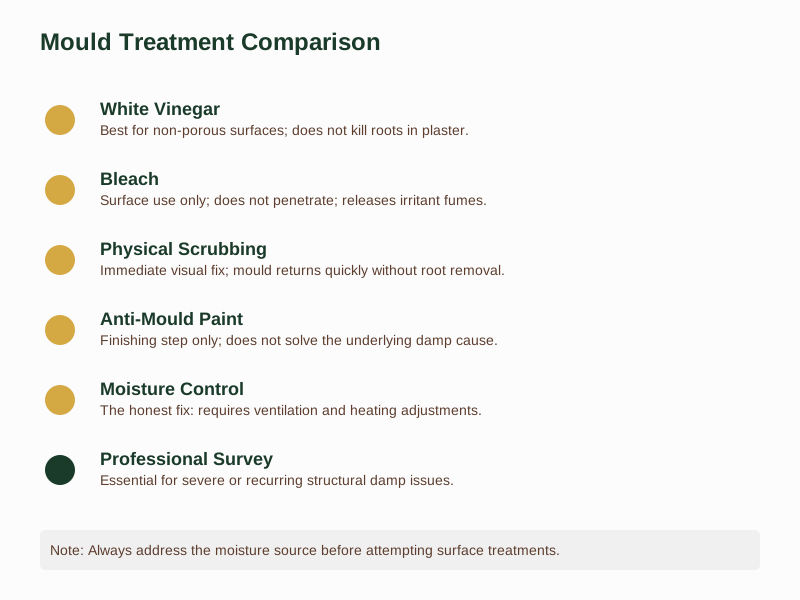
Mould Treatment Comparison
| Treatment | Best For | Limitations |
|---|---|---|
| White Vinegar | Non-porous surfaces (tiles, glass) | Does not penetrate porous plaster; roots survive |
| Bleach | Surface mould on tiles and grout | Cannot penetrate porous plaster; releases irritant fumes |
| Physical Scrubbing | Immediate visual improvement | Does not kill roots; mould returns quickly |
| Anti-Mould Paint | Finishing step after cleaning | Does not fix underlying damp or moisture source |
| Moisture Control | Long-term prevention | Requires changes to room ventilation and heating |
| Professional Survey | Severe or recurring damp | Addresses structural or systemic moisture issues |
Frequently Asked Questions
Is mould on walls dangerous to my health?
Mould spores can affect indoor air quality and may worsen respiratory conditions or trigger allergic reactions, particularly for children, older people, and those with existing breathing problems. NHS guidance advises cleaning small areas, ventilating, and reducing moisture rather than treating mould as a toxicity emergency — and if you’re worried about symptoms, speak to a GP. What matters practically is getting the moisture under control, not panic-buying remediation products.
Can I paint over mould with anti-mould paint?
Anti-mould paint can help prevent surface regrowth and is useful as a finishing step once a wall is clean and dry. Products like Ronseal Anti-Mould Paint (paid link) and Dulux Easycare Bathroom (paid link) both get positive mentions for covering stains and giving a decent finish. But they don’t fix the underlying damp. If the wall is still cold, still condensing, and still damp to the touch, the mould will grow through the new paint within weeks. Clean and dry the wall first, address the moisture source, then paint.
What should I do if my landlord won’t fix the damp?
Report the problem in writing to your landlord or managing agent — email gives you a timestamp, which matters. Keep copies of everything. If the damp and mould is severe or the landlord is unresponsive, contact your local council’s environmental health team; they can inspect and, if necessary, serve a formal notice. In England, Awaab’s Law is intended to push social landlords toward faster action on serious hazards. Citizens Advice and Shelter both have detailed guidance on tenant rights in this situation, and they’re free to access.
Now you know what vinegar can and can’t do on a UK wall — and more importantly, why the real fix is almost never a spray. If you’re ready to work out exactly what’s causing the moisture in your home, the free damp and mould diagnosis checklist walks you through the key questions in about ten minutes. It’s the honest next step before you spend money on anything else.
Related Guides
For a complete overview, see our How to Remove Black Mould From Walls Safely .
Sources & Further Reading
As an Amazon Associate we earn from qualifying purchases.
Note: General guidance only. Always verify details with a qualified professional or official source.
See Dulux Easycare Bathroom on Amazon → (paid link)
See Ronseal Anti-Mould Paint on Amazon → (paid link)
Buy Astonish Mould & Mildew on Amazon → (paid link)