Can You Clean Mould Safely With Just a Mask?
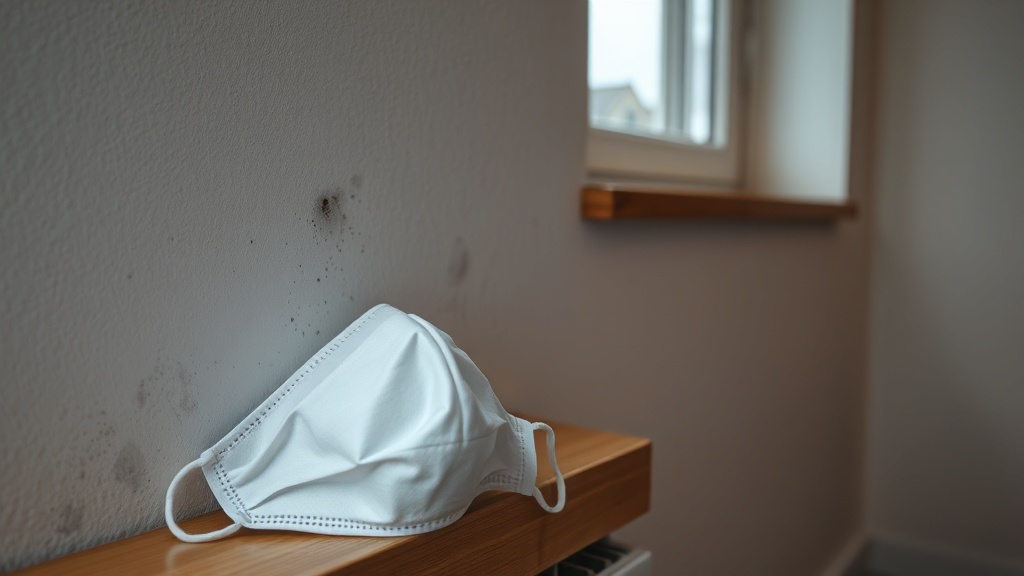
A standard surgical mask does not protect against mould spores — you need at least an FFP2 respirator, and for areas over 1m², an FFP3 is recommended by UK health guidance. The mechanism is simple: mould spores are typically 1–10 microns in diameter. A surgical mask filters particles down to around 3 microns — sized for bacteria, not the smaller fungal spores that pose the real risk. Plus, a surgical mask relies on ear loops or simple straps, which leave gaps around the nose and cheeks. Even a perfectly filtered surgical mask cannot protect you if unfiltered air bypasses the edges. FFP2 respirators filter at least 94% of particles as small as 0.3 microns — roughly 15 times smaller — and their adjustable nose bridge and head straps create the seal that makes the protection real. For a small, manageable patch of mould, an FFP2 is the minimum worth wearing. Step up to FFP3 for anything over a square metre. This is the honest bar for actual protection.
You’ve discovered a patch of mould and your first instinct is to grab whatever face covering is nearest and get it sorted. That makes sense. What doesn’t make sense is assuming that covering your nose and mouth with a standard surgical mask is doing the job.
The problem is that a surgical mask and a mould respirator are not doing the same thing. The gap between them matters, especially if you have asthma or allergies, or if the patch you’re dealing with is bigger than it looks.
This article gives you the honest answer on what protection you actually need, what else you should be wearing, and the hard stop rule for when DIY cleaning is not the right call.
The Mask: Why a Surgical Mask Is Not Enough
Mould spores are tiny — typically 1 to 10 microns across. A standard surgical mask filters particles down to around 3 microns, which is the size range for bacteria, not the smaller fungal spores that cause the actual problem. There is also the seal issue: surgical masks rely on ear loops or simple back-of-head straps, which leave gaps around the nose and cheeks. A respirator with a proper facial seal prevents unfiltered air from bypassing the filter entirely.
FFP2 respirators filter at least 94% of particles as small as 0.3 microns — roughly 15 times smaller than what a surgical mask is designed for. Their adjustable nose bridge and head straps create the seal that makes the protection real. For small, manageable patches, an FFP2 is the minimum worth wearing. For anything over approximately 1m², UK health guidance recommends stepping up to an FFP3 respirator, which filters 99% of particles at that size. Larger affected areas mean a higher concentration of airborne spores and longer exposure time, which shifts the risk profile.
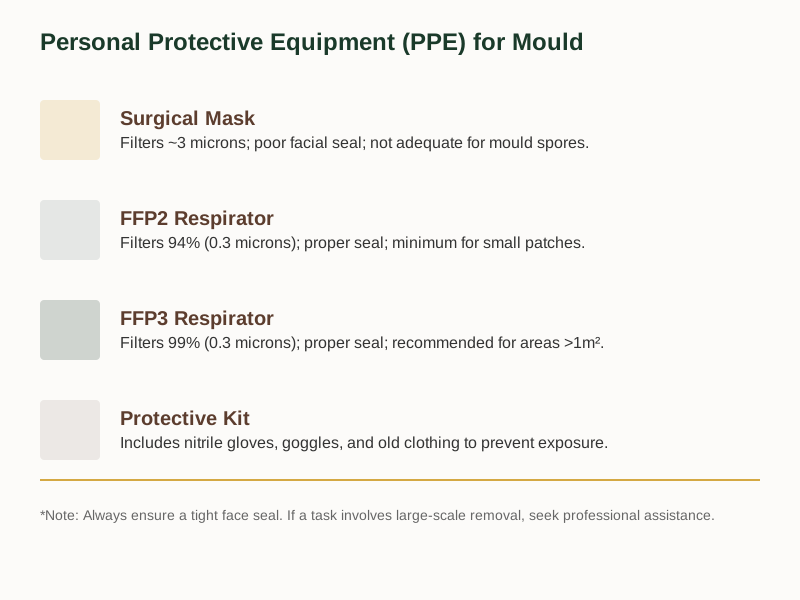
Here is how the options compare:
- Surgical mask — filters down to ~3 microns; poor facial seal; not adequate protection against mould spores
- FFP2 respirator — filters 94% of particles down to 0.3 microns; proper seal; minimum for small patches
- FFP3 respirator — filters 99% of particles down to 0.3 microns; proper seal; recommended for areas over 1m²
The mask is only one part of the kit. Wearing an FFP3 but skipping the gloves means your skin is exposed to irritants and mould toxins. Wearing both but not protecting your eyes means spores can still enter through the mucosa. You need all three layers working together.
Gloves and Goggles: The Other Two Layers
The glove question is simple: nitrile, not latex. Latex allergies are common enough that latex gloves are a risk when handling cleaning chemicals and mould simultaneously. Nitrile is chemically resistant, widely available, and does not carry the allergy risk.
Eye protection matters for a straightforward reason: mould spores can irritate the mucous membranes, and rubbing your eyes while cleaning is reflexive. Any reasonably close-fitting goggles or wraparound eye protection stops that route of exposure entirely.
You also want to be wearing old, long-sleeved clothing that you can launder separately afterwards. Spores cling to fabric. The last thing you want is to move through the rest of your flat carrying spores on your sleeves.
The full protective kit:
- FFP2 or FFP3 respirator (see above for which you need)
- Nitrile gloves
- Goggles or wraparound eye protection
- Old long-sleeved clothing, washed separately after use
That is the honest minimum. Anything sold as a “mould protection kit” that does not include a properly rated respirator is not a complete kit — it is a partial one with a higher price tag.
The “When to Stop” Rule
The question is not “can I clean mould safely with just a mask?” — it is “should I?” The answer depends on three things: the size of the affected area, the source of the moisture, and your own health.
The size threshold is the clearest rule UK health guidance gives: if the mouldy area is larger than roughly 1m², call in a professional. Beyond that scale, the spore load and exposure time cross a threshold where the risk warrants proper remediation equipment and training.
Three other situations where you should stop and get help:
If the moisture source is structural. A burst pipe, a leaking roof, or rising damp are not condensation problems — cleaning the mould is a temporary fix while the underlying cause keeps feeding it. What you need first is a proper independent damp survey, not a contractor who also quotes for the repair work. The conflict of interest is obvious. The fix is a surveyor who has nothing to sell except the diagnosis.
If you have asthma, COPD, or a weakened immune system. NHS guidance notes that mould can trigger asthma and worsen respiratory conditions. If you are already dealing with that, adding spore exposure from cleaning on top of it is not a reasonable risk to take.
If the mould has got into porous materials. Plasterboard, carpet, curtains, and soft furnishings are not salvageable once mould has penetrated them. Scrubbing makes the surface look better, but the spores inside the material remain. Replacing affected soft furnishings is the honest answer, not more cleaning.
For rented homes, this line matters even more. Under Awaab’s Law, landlords in the social sector have a legal duty to investigate and address dangerous damp and mould hazards. Private tenants should report in writing and escalate to the council’s environmental health team if the landlord does not act. That is not a sales pitch — it is the correct route, and it is free.
The honest summary: if the area is under 1m², the source is condensation (not a hidden leak or rising damp), you are in reasonable respiratory health, and the mould is on a hard surface you can clean — then yes, you can do it yourself, with the right gear. If any of those conditions are not met, stop and get a professional in. This is not overcautious — it is knowing where the line is.
Cleaning Mould Safely
Assuming you have confirmed the situation is within DIY territory, the process is straightforward. Open windows and close internal doors to isolate the room from the rest of the flat. Work from warm into cooler areas — the heat helps. Do not brush mould, as brushing releases spores into the air.
Spray white vinegar directly onto the affected area and leave it for at least an hour before scrubbing. Vinegar is a natural fungicide — it kills mould on contact. Bleach does not work as well on porous surfaces because it bleaches the surface stain without killing the root structure, and it releases fumes in an enclosed bathroom.
After scrubbing, wipe the area with a clean, damp cloth to pick up any dislodged spores. Then dry the surface thoroughly — a dehumidifier or a fan helps here. Moisture left behind just sets the conditions for regrowth.
The step most people skip: fixing the moisture source. Cleaning removes the mould; it does not stop the conditions that caused it. Without addressing ventilation, cold surfaces, or humidity levels, the mould will be back — often within weeks. If you are dealing with persistent condensation, a dehumidifier is worth its salt for keeping humidity in check long-term.
Now you know what to look for — get the Free Damp & Mould Diagnosis Checklist to work through whether your mould is condensation-driven and what steps come next.
Frequently Asked Questions
Can I use a vacuum cleaner to remove mould?
Only if it has a HEPA filter. A standard vacuum blows air back out and can disperse spores into the room. A HEPA-filter vacuum traps them. If you are not sure whether your vacuum has one, check the filter specification — it should state “HEPA” explicitly.
How often should I check for mould?
Once a month is a sensible routine, particularly from October through March when condensation is highest and windows stay shut. If you have had a mould problem before, checking every couple of weeks during winter is not excessive.
Is bleach safe to use on mould?
Bleach can make the surface look clean by bleaching the stain, but it does not kill mould roots in porous surfaces. On hard surfaces like tiles, it can work — but vinegar is generally a better option for bathrooms and kitchens because it does not release the fumes that bleach does in an enclosed space.
What if my landlord refuses to fix the damp?
Document everything with photos and dates. Report the problem to your local council’s environmental health team in writing — this is the route that triggers their enforcement powers. Under Awaab’s Law, social landlords in particular have a legal duty to address dangerous damp and mould hazards, though the specific timelines for private landlords are still being clarified.
Respirator Protection Levels
| Respirator Type | Filter Efficiency | Recommended Use |
|---|---|---|
| Surgical Mask | ~3 microns | Not recommended for mould |
| FFP2 | 94% at 0.3 microns | Small patches (under 1m²) |
| FFP3 | 99% at 0.3 microns | Large areas (over 1m²) |
Where to Go From Here
The core takeaway is simple: a standard surgical mask is not adequate protection against mould spores. For small patches, an FFP2 respirator with a proper seal is the minimum. For anything over 1m², step up to FFP3. Add nitrile gloves and eye protection, and you have a complete kit that is genuinely protective rather than just reassuring-looking.
Cleaning the mould is only half the problem. Without fixing the moisture source — improving ventilation, managing humidity, or addressing the underlying damp — the mould will return. That is where the long-term solution lies, and it is why understanding the cause matters just as much as the clean.
If you are ready to work through what is actually causing the damp in your home, grab the Free Damp & Mould Diagnosis Checklist — it takes you through the key questions to answer before you spend money on anything.
Related Guides
For a complete overview, see our How to Remove Black Mould From Walls Safely .
Sources & Further Reading
Note: General guidance only, verify details with a qualified professional or official source.